
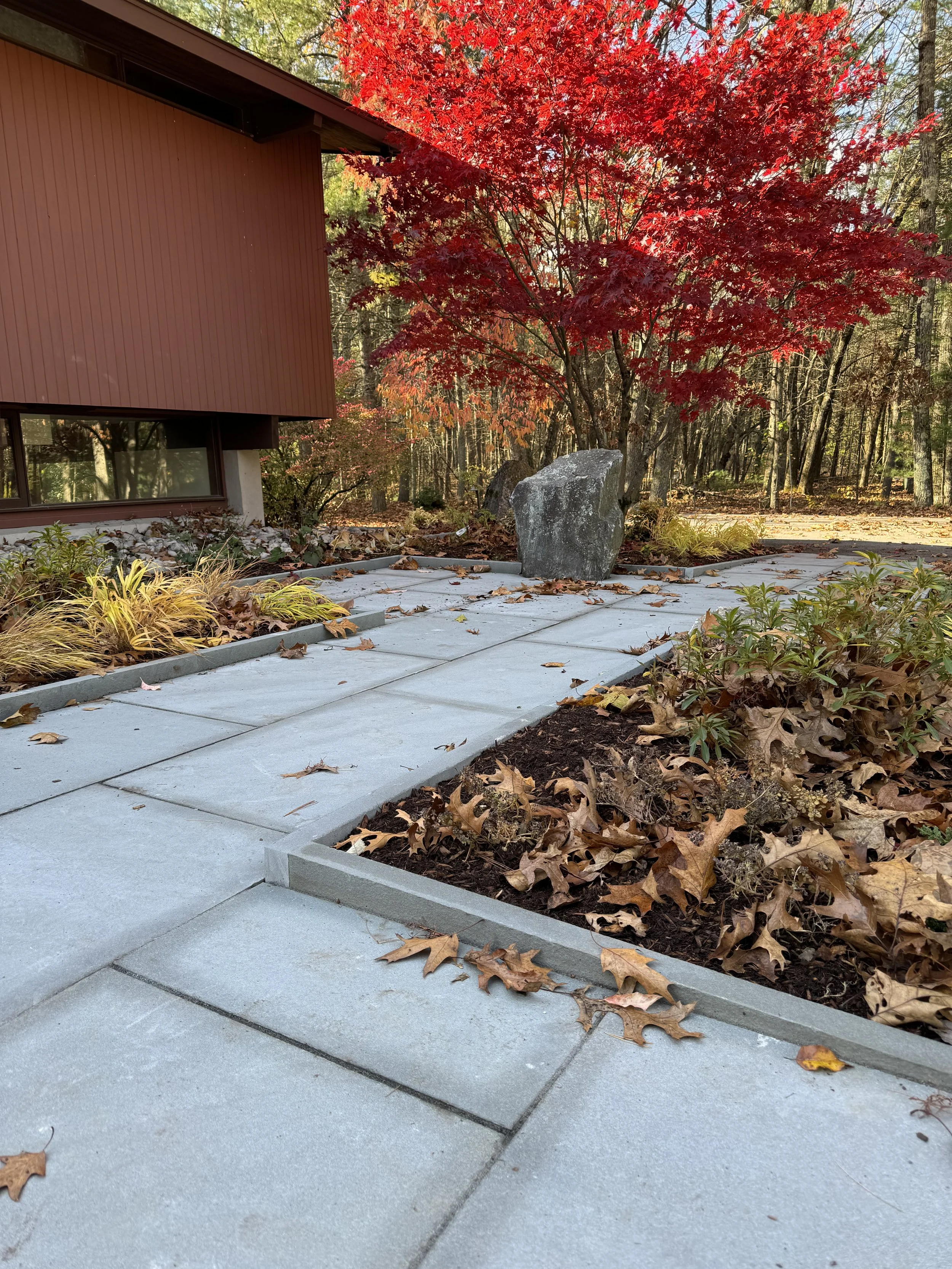
Plant This Fall, Enjoy It Next Spring: Why Autumn Is the Perfect Time to Transform Your Landscape
Discover why fall planting gives perennials, shrubs, trees, and grasses a head start for spring and creates beautiful seasonal interest in your Massachusetts landscape.
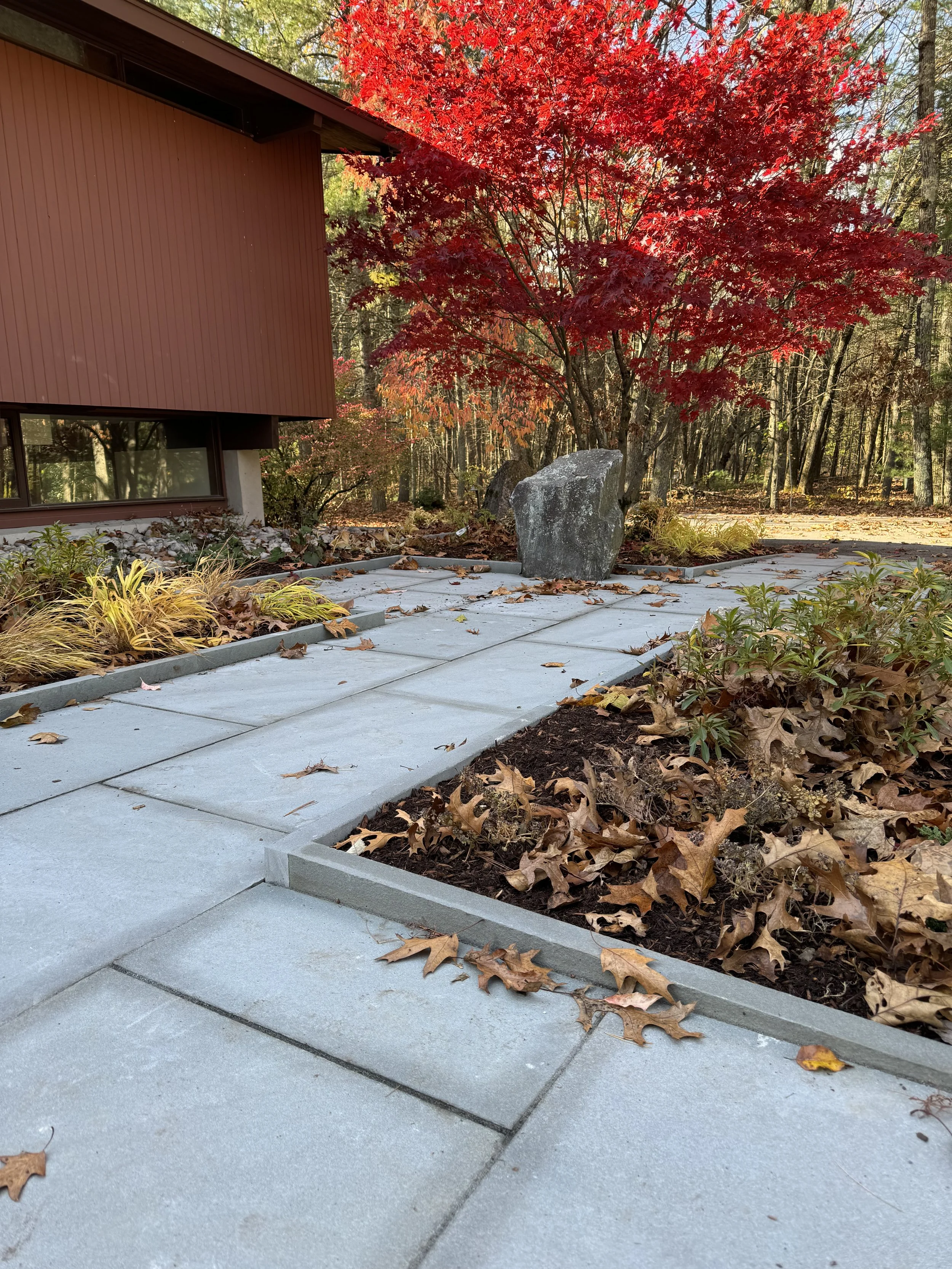
Spring may get most of the attention when it comes to gardening, but experienced landscapers know that some of the best spring landscapes actually begin in the fall.
At Ahronian Landscaping & Design, we continue installing plantings well into autumn—right up until the ground freezes when conditions allow. Cooler temperatures create favorable conditions for establishing many perennials, shrubs, trees, and other landscape plants, making fall planting an opportunity to improve your property now and give your new landscape a head start for the year ahead.
Instead of waiting until everything begins growing again next spring, consider what you would like to see outside your windows when the warmer weather returns.
Why Is Fall Such a Good Time for Planting?
Last fall, we discussed why autumn is an excellent season for planting trees. Many of those same advantages apply to other types of landscape plantings.
As temperatures cool, plants experience less environmental stress than they do during the heat of summer. Cooler weather also means less water is lost through evapotranspiration—the combined process of water evaporating from the soil and being released through plant leaves.
That allows moisture to remain available to newly installed plants for longer periods. Although proper watering is still essential after installation and should continue as conditions require until the ground freezes, autumn conditions can make establishing new plantings more manageable.
Most importantly, fall planting gives root systems valuable time to begin establishing before winter. While visible growth slows as plants approach dormancy, the work happening below ground helps prepare them for the next growing season.
Give Your Spring Landscape a Head Start
Imagine your property during next year's first spring clean-up.
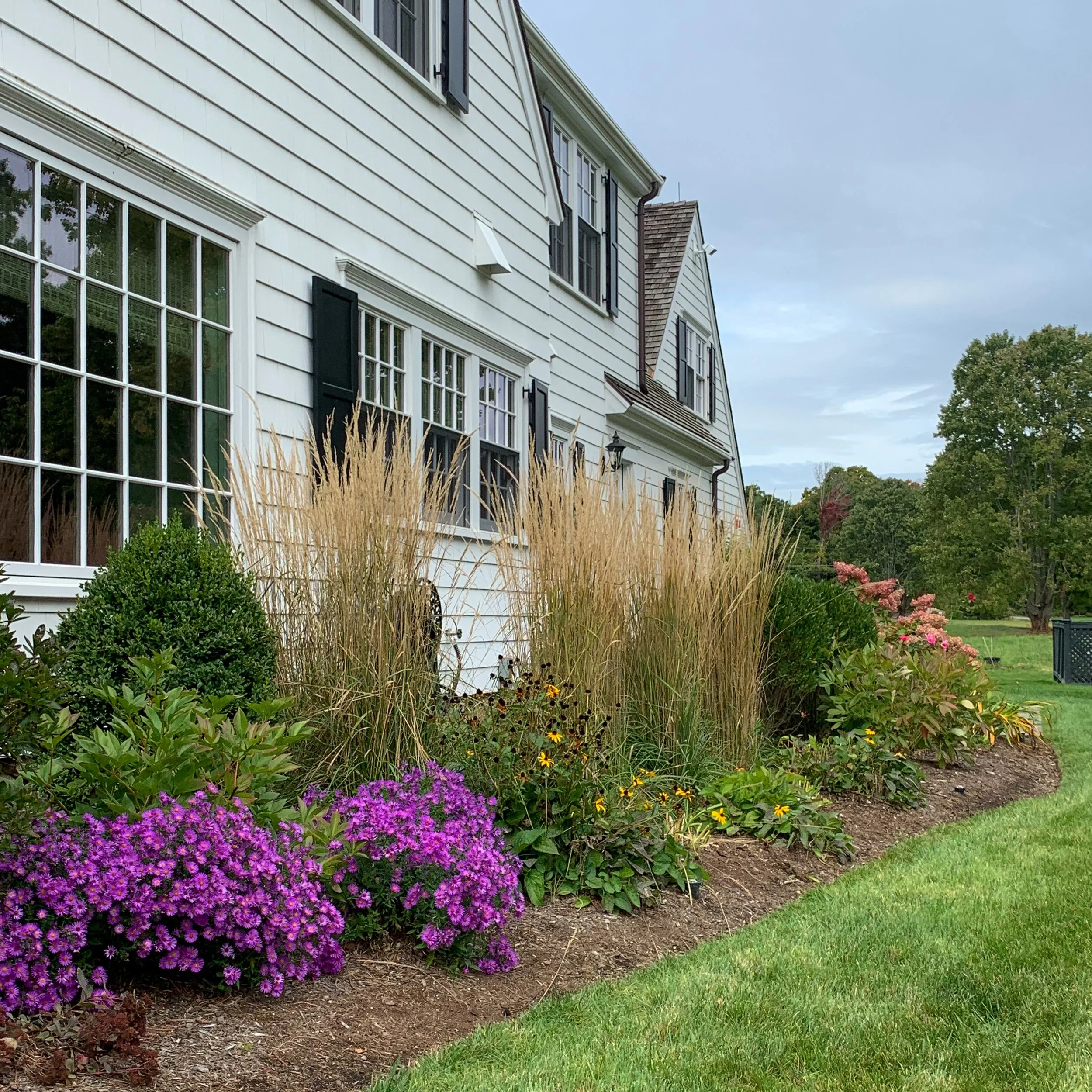
Fresh mulch defines the garden beds. Perennials begin emerging from the soil. Flowering shrubs start developing new growth, and ornamental trees prepare to leaf out and bloom.
By completing your landscape plantings in the fall, much of the foundation for that transformation is already in place. Instead of beginning a planting project after spring arrives, established plants are ready to respond as temperatures warm.
Fall can be an excellent time to introduce new garden beds, enhance existing foundation plantings, fill gaps in the landscape, or rethink areas that did not perform as well as you hoped during the summer.
Fall Plantings Offer Beauty Right Away, Too
Planting for next spring doesn't mean sacrificing interest this fall.
There are plenty of plants that bring color and texture to the autumn landscape. Late-flowering perennials such as asters, sedum, and anemones can extend garden color after many summer favorites have finished blooming.
Foliage adds another dimension. The brilliant reds of maples and the golden-yellow foliage of ginkgo trees can create striking seasonal focal points, while plants such as andromeda can contribute colorful new growth.
Ornamental grasses offer yet another layer. Their fall tassels introduce texture and movement into planting beds and complement the changing colors around them.
Together, these plants demonstrate an important principle of thoughtful landscape design: a garden shouldn't be designed for only one moment of the year.
Think Beyond Individual Plants
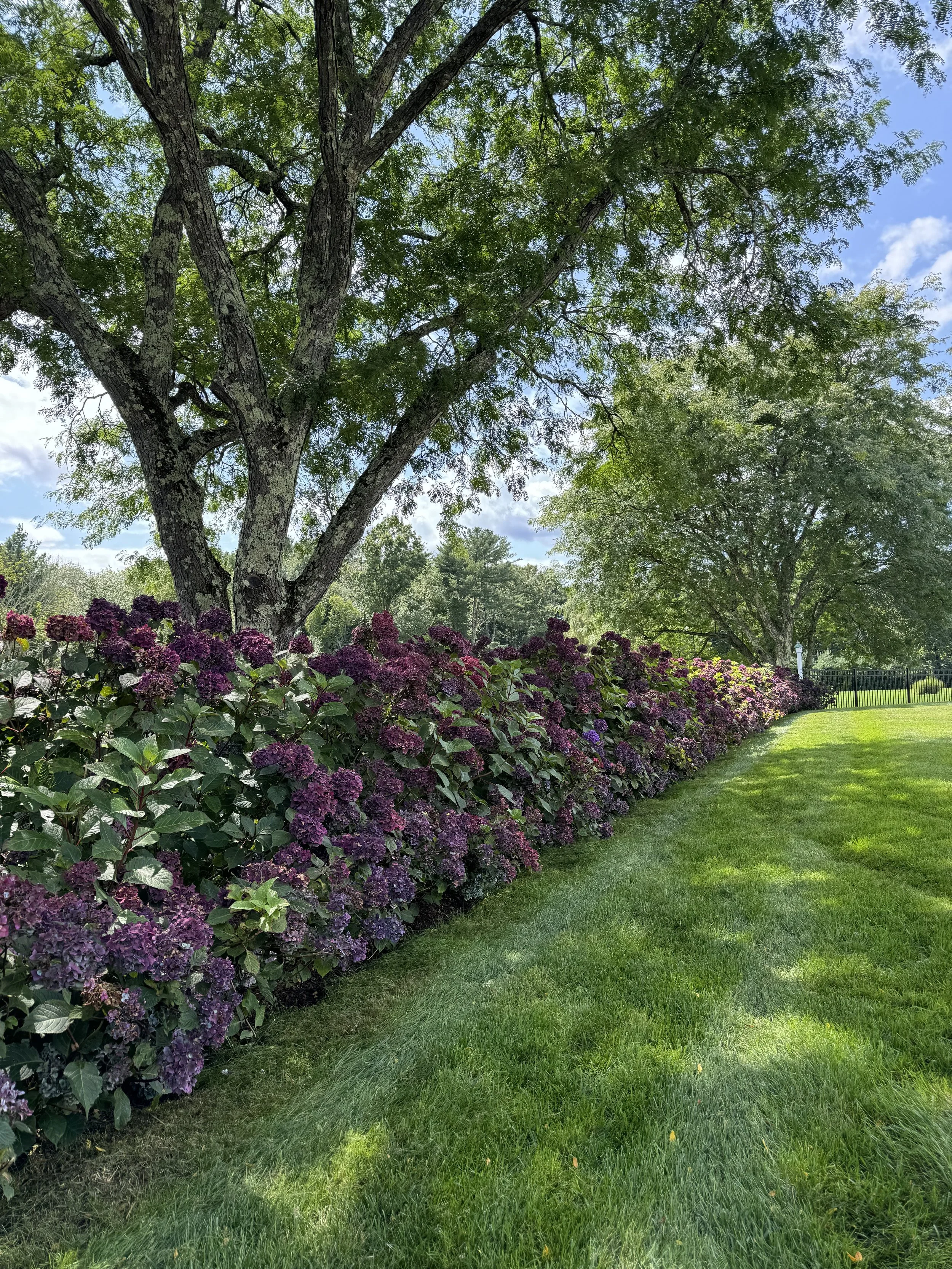
A successful planting design isn't simply about choosing plants you like. It's about understanding how they will work together.
Trees can establish the upper layer and provide structure. Shrubs add volume and seasonal interest. Perennials introduce changing flowers and foliage, while ornamental grasses contribute movement and texture.
Height, mature size, bloom sequence, sun exposure, soil conditions, drainage, and spacing all need to be considered. Choosing the right plant for the right location helps create healthier landscape plantings while reducing problems caused by overcrowding or unsuitable growing conditions later.
Planning combinations carefully also creates a landscape where something interesting is happening throughout multiple seasons—not simply during the peak of summer.
Don't Assume You've Missed the Planting Season
Once summer ends, it's easy to assume landscape projects need to wait until spring. In reality, the fall planting season can continue much later than many homeowners expect. At Ahronian Landscaping & Design, we can continue planting until the ground freezes when conditions are suitable.
That makes autumn a valuable window for completing planting projects while taking advantage of cooler temperatures and allowing new plants to begin establishing before spring.
It is also an ideal time to look critically at your property while this year's landscape is still fresh in your mind. Where could you use more color? Is a foundation bed missing structure? Would flowering shrubs improve the view from your windows? Could an ornamental tree create a new focal point? Are there areas that seem empty after summer flowers fade?
Those observations can become the foundation of a stronger landscape design.
Plant Now for the Landscape You'll Love Next Year
One of the joys of landscaping is watching a thoughtfully designed property mature from season to season. What you plant this October isn't only about how your yard looks today. It's an investment in next spring, next summer, and many seasons beyond.
With colorful perennials, flowering shrubs, ornamental trees, evergreens, grasses, and carefully planned combinations, fall planting can transform an existing landscape and set the stage for a beautiful return in spring.
At Ahronian Landscaping & Design, we help homeowners select and install plants with their long-term growth, seasonal interest, and overall landscape in mind. Don't wait for spring to start imagining a more beautiful yard—the perfect time to begin may be this fall.
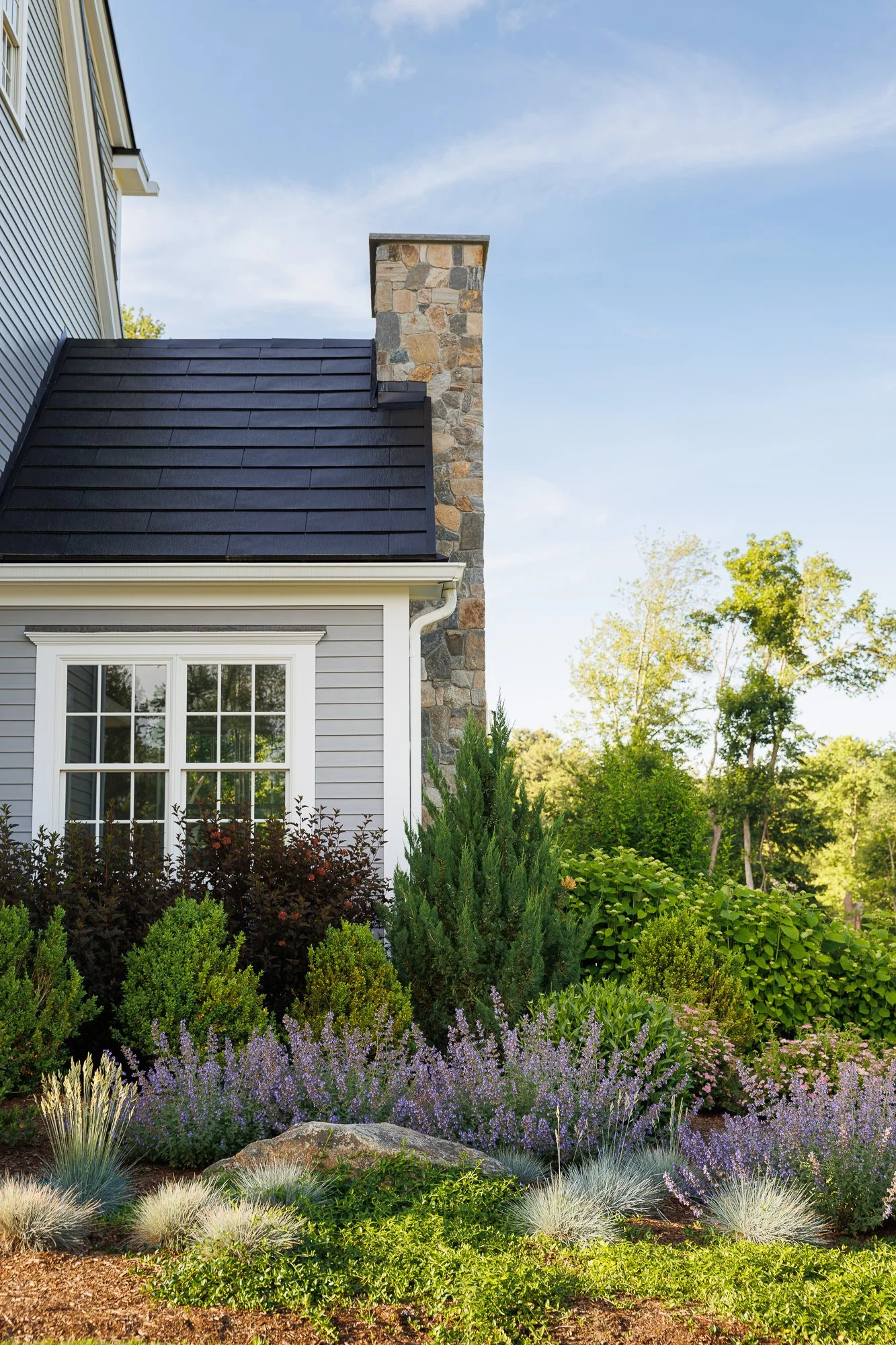
Designing With Depth: How Layering Creates a More Beautiful Landscape
Discover how landscape layering brings depth, seasonal color, texture, and balance to your yard through thoughtfully planned trees, shrubs, perennials, evergreens, and natural garden elements.
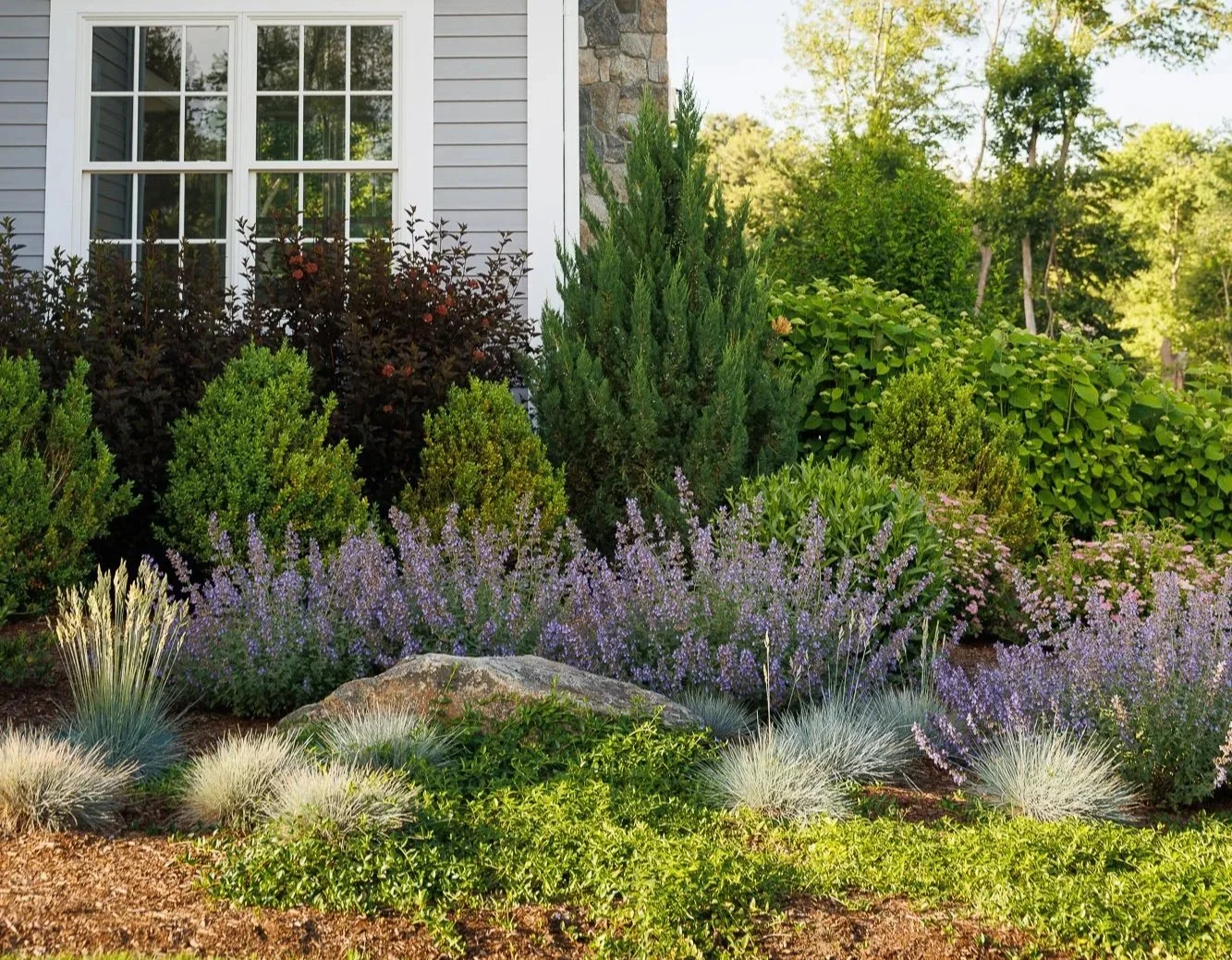
A well-designed garden is rarely made up of plants that are all the same size, shape, or height. The landscapes that feel most natural and visually complete often use landscape layering to create depth, movement, and interest. By arranging trees, shrubs, perennials, and ground-level elements in thoughtful relationships, a yard can feel fuller and more cohesive without appearing crowded.
At Ahronian Landscaping & Design, we use landscape design principles to consider not only which plants belong in a garden, but also how they will relate to one another as they grow. Successful layered plantings help guide the eye through the property, create a sequence of color and texture, and connect the home to the surrounding environment.
Begin With the Largest Landscape Elements
Layering generally begins with the tallest elements in the landscape. Mature trees, woodland edges, and existing evergreens often form the backdrop of the design. From there, smaller ornamental trees and large shrubs can help transition the eye toward medium-height shrubs, perennials, and low-growing plants.
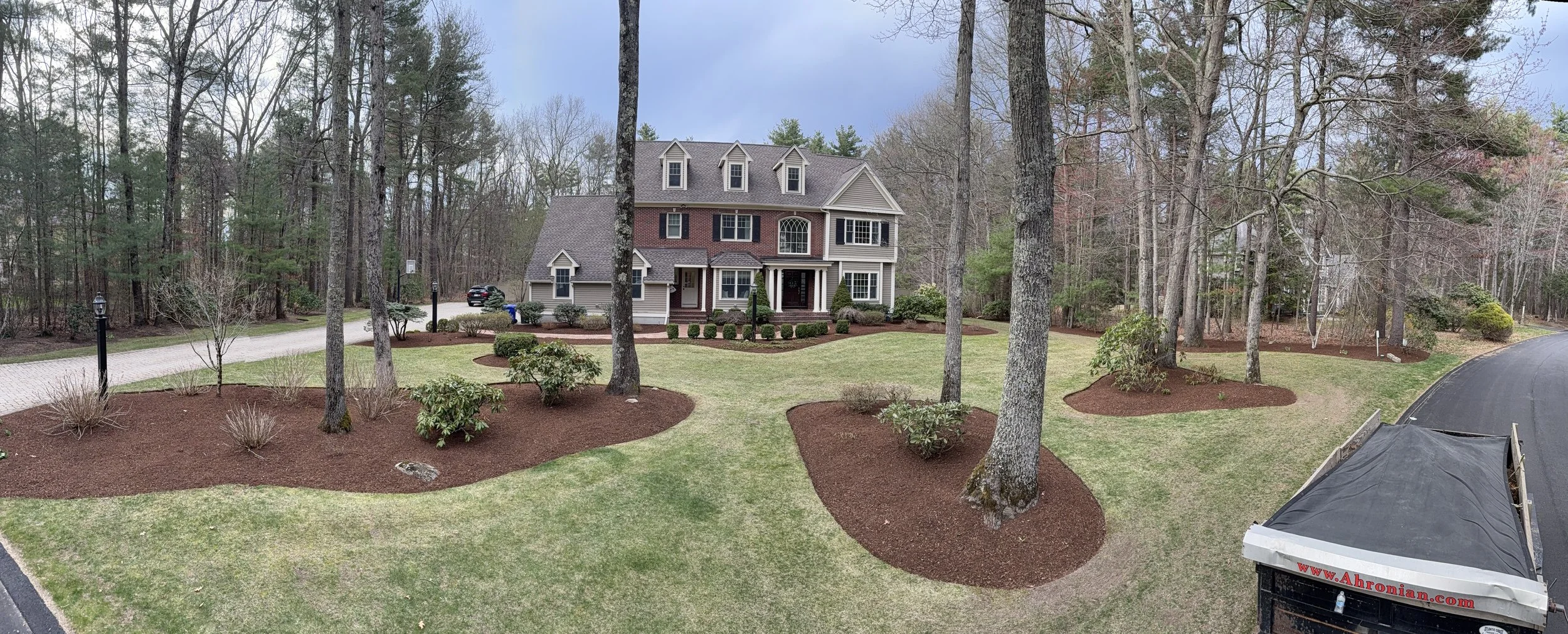
This gradual change in height is especially important when a property borders a wooded area. Instead of moving abruptly from tall peripheral trees to a flat lawn, planting beds can scale the height downward toward the home. The result feels more natural and makes the entire property appear connected.
This approach also benefits homeowners from inside the house. The garden beds closest to the home are often what you see when looking through your windows. Thoughtful landscape layering creates an attractive foreground while preserving views of taller trees and the wider property beyond.
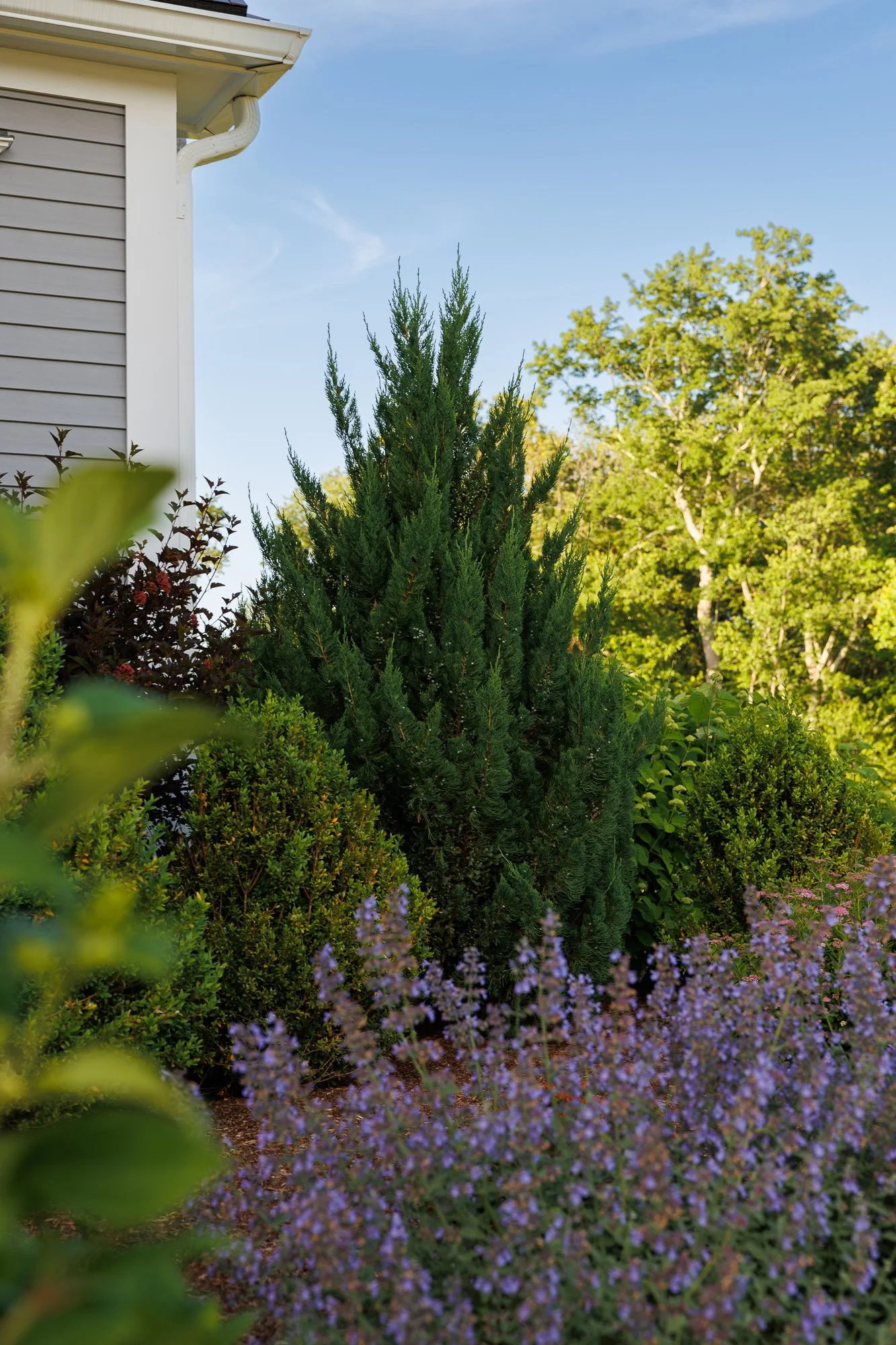
Create Seasonal Color Through Plant Selection
Plants should not all reach their peak at the same moment. A successful planting plan creates a sequence of seasonal color, allowing different plants to take the spotlight throughout the year.
Spring bulbs and flowering shrubs may begin the display, followed by summer perennials and trees with ornamental blooms. Late-blooming perennials, colorful foliage, and ornamental grasses can then carry the garden into fall. By choosing plants with different bloom times, the landscape continues to change rather than peaking for only a few weeks.
Planning for seasonal color also makes established gardens more rewarding. As one bloom fades, another plant begins to flower or reveal a new foliage color. This creates an evolving landscape that offers something different every time you step outside.
Use Texture to Add Visual Interest
Color often receives the most attention in garden planning, but texture can be just as important. Broad leaves, delicate flowers, fine grasses, glossy evergreens, and deeply veined foliage all interact differently with light and movement.
Combining contrasting textures keeps layered plantings from blending into one indistinct mass. A soft ornamental grass may sit beside a dense shrub, while a perennial with bold foliage can provide contrast against smaller leaves. These combinations add detail and character even when fewer plants are in bloom.
Incorporate Evergreens for Winter Structure
Deciduous plants provide flowers and seasonal changes, but evergreens give the garden a dependable framework. Using evergreen trees and shrubs of different heights provides winter interest and ensures the yard retains form after perennials disappear and deciduous plants lose their leaves.
Evergreens can anchor corners, soften foundations, provide screening, and connect planting beds throughout the property. Smaller evergreen shrubs can be repeated within beds, while larger specimens create focal points or transition the landscape toward existing trees.
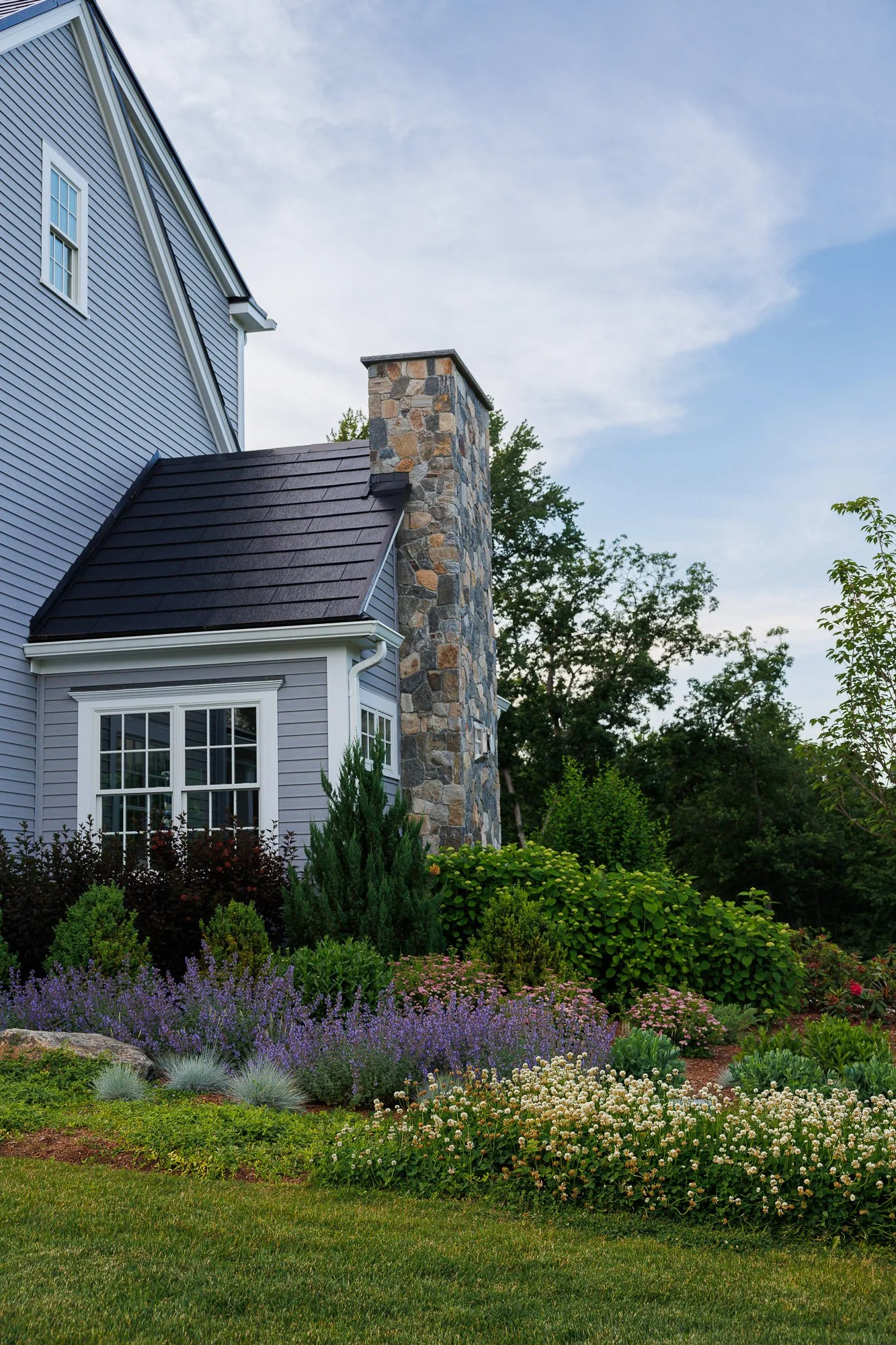
Finish the Front of the Garden
The lowest layer helps soften the edge of a planting bed and creates a finished transition to the lawn, patio, or walkway. Ground covers are especially useful at the front of beds, where they can fill open soil, reduce the visual impact of mulch, and bring texture closer to the viewer.
Low perennials and spreading plants can also help create a gradual progression from taller shrubs to the bed’s edge. Proper spacing remains important so each plant has room to develop without overwhelming nearby features.
Add Natural Elements Beyond Plants
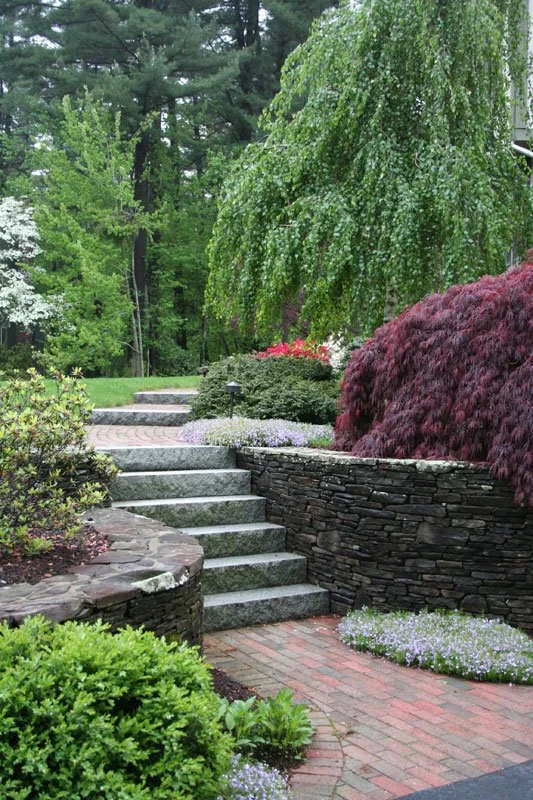
Plants are not the only components used to create layers. Garden stones can break up large planting areas, add natural appeal, and provide visual interest between groups of foliage. Their permanent structure is especially valuable during winter, when many plants are dormant.
Stone can also connect a garden to nearby walls, walkways, patios, or natural woodland areas. When placed carefully, these elements look like an intentional part of the landscape rather than a separate decoration.
Keep the Entire Property in Balance
Every layer must relate to the overall property. Landscape scale considers the height and width of the house, the size of mature trees, the dimensions of planting beds, and the amount of open space around them.
Plants that are too small may look disconnected beside a large home, while oversized shrubs can block windows or overwhelm a narrow bed. Thoughtful landscape design creates balance by selecting plants that are appropriately sized for their surroundings, both at installation and at maturity.
Repetition also helps keep the yard cohesive. Using the same plant, texture, or material in more than one area creates visual connections and allows the landscape to flow naturally from one space to another.
A Landscape Designed to Grow Beautifully
Effective landscape layering is about creating relationships between plants, structures, and views. Trees provide the backdrop, shrubs build depth, perennials bring changing color, and lower elements finish the design. Each layer has a purpose, but together they create a landscape that feels complete.
At Ahronian Landscaping & Design, our landscape design process considers how every plant will grow, change, and contribute to the property over time. Through carefully planned layered plantings, we create gardens that offer lasting structure, seasonal beauty, and a cohesive connection between your home and its surroundings.
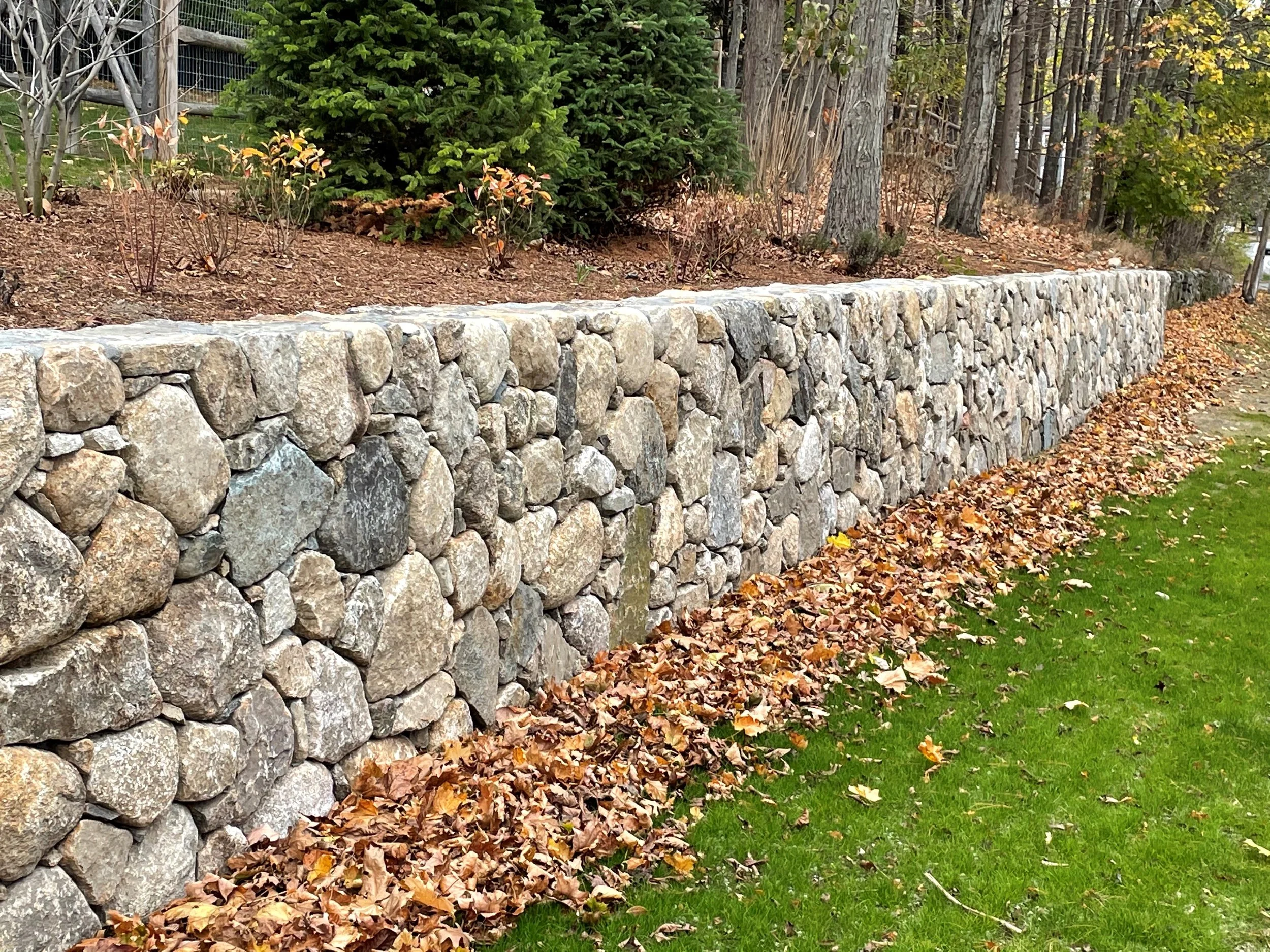
Retaining Walls: More Than Just a Landscaping Feature
Discover how retaining walls protect your property from soil erosion, improve drainage, and create functional outdoor spaces. Learn why professional retaining wall installation is a smart investment for Massachusetts homeowners.
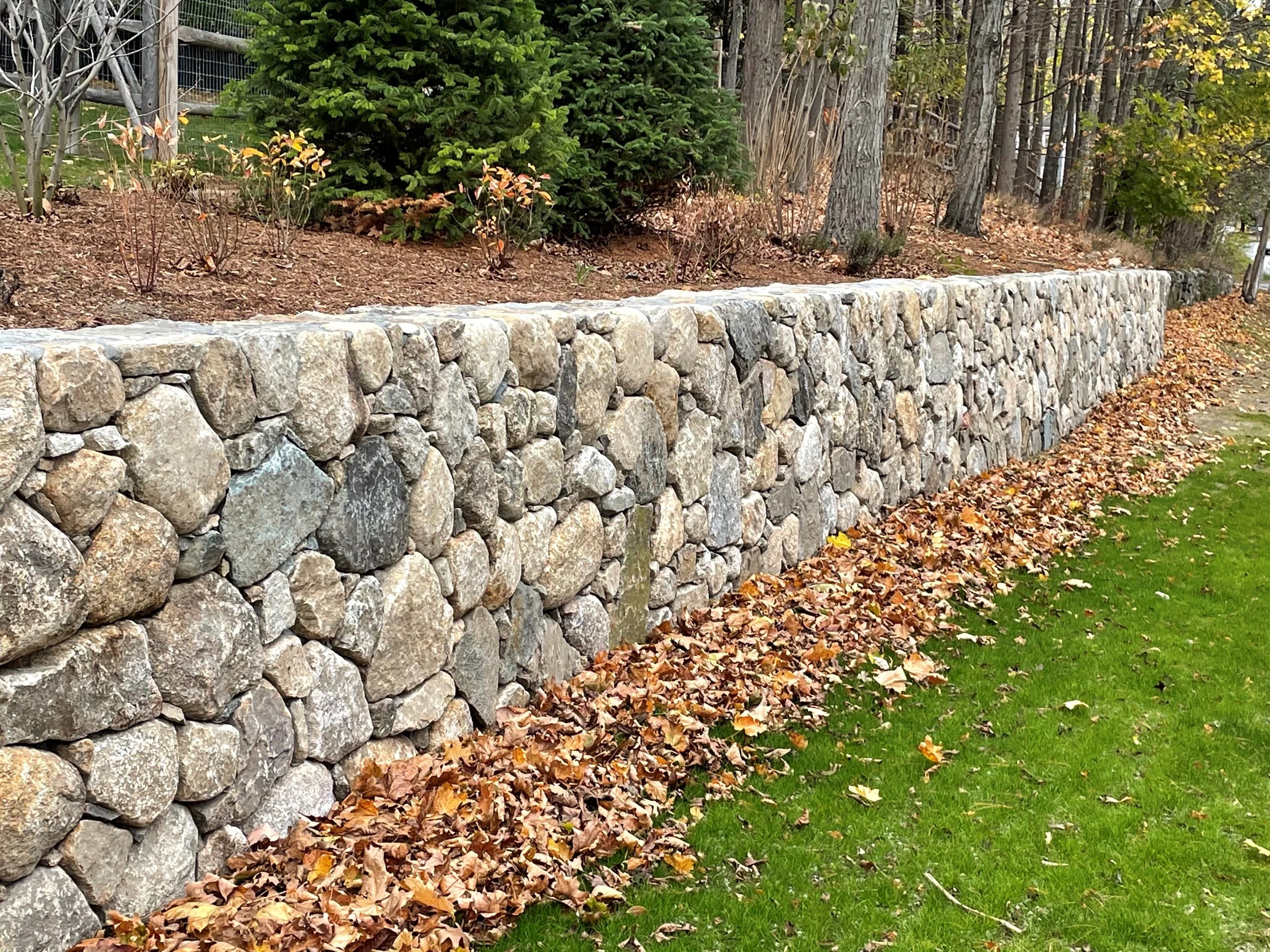
When most homeowners think of retaining walls, they picture a beautiful landscaping element that adds character to a yard. While retaining walls certainly enhance curb appeal, their true purpose goes far beyond appearance. A properly designed and constructed retaining wall provides essential structural support, helps manage drainage, and protects your property from soil erosion.
At Ahronian Landscaping & Design, we build retaining walls that are both functional and visually appealing, giving homeowners long-lasting solutions that improve the safety and usability of their outdoor spaces.
What Is a Retaining Wall?
A retaining wall is a structure built to hold back soil where there is an elevation change. Without one, sloped landscapes can experience soil movement, erosion, and water runoff that may eventually damage landscaping, driveways, patios, or even your home's foundation.
Whether your property has a steep backyard or simply needs better drainage management, a retaining wall provides stability while creating more usable outdoor space.
The Benefits of Installing a Retaining Wall
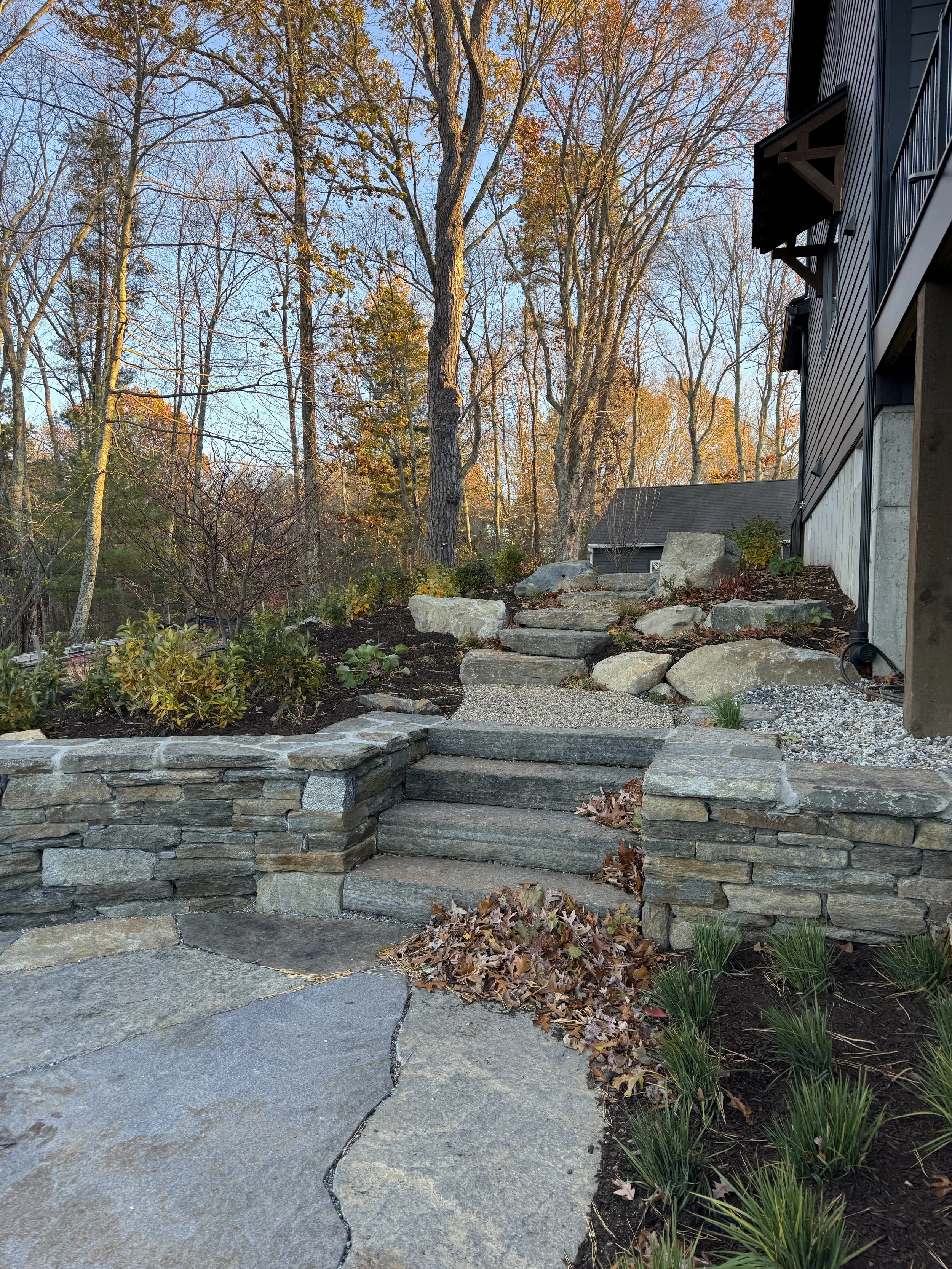
A professionally installed retaining wall offers several advantages beyond its attractive appearance.
Prevents Soil Erosion
Heavy rains and seasonal weather can gradually wash away soil, especially on sloped properties. Retaining walls help keep soil securely in place, reducing erosion and protecting your landscape investment.
Improves Drainage
Poor drainage can lead to standing water, saturated soil, and foundation concerns. Retaining walls are often designed with proper drainage systems that help redirect water away from your home and landscaping.
Creates More Usable Outdoor Space
Sloped yards can be difficult to enjoy or maintain. Retaining walls allow homeowners to level portions of their property, creating functional areas for patios, gardens, walkways, or outdoor entertaining.
Enhances Curb Appeal
Retaining walls can add definition and visual interest to your landscape. Whether constructed with natural stone, concrete blocks, or brick, they create clean lines that complement your home's exterior.
Protects Nearby Structures
By controlling soil movement, retaining walls help safeguard nearby structures such as driveways, sidewalks, patios, and even your home's foundation from shifting or settling caused by unstable ground.
Signs You May Need a Retaining Wall
If you've noticed any of the following around your property, it may be time to consider a retaining wall:
Soil washing away after heavy rain
Sloped areas that are difficult to maintain
Water pooling near your home
Leaning landscape features
Erosion around patios or walkways
Uneven or unstable ground
Addressing these issues early can help prevent more extensive repairs in the future.
Why Professional Installation Matters
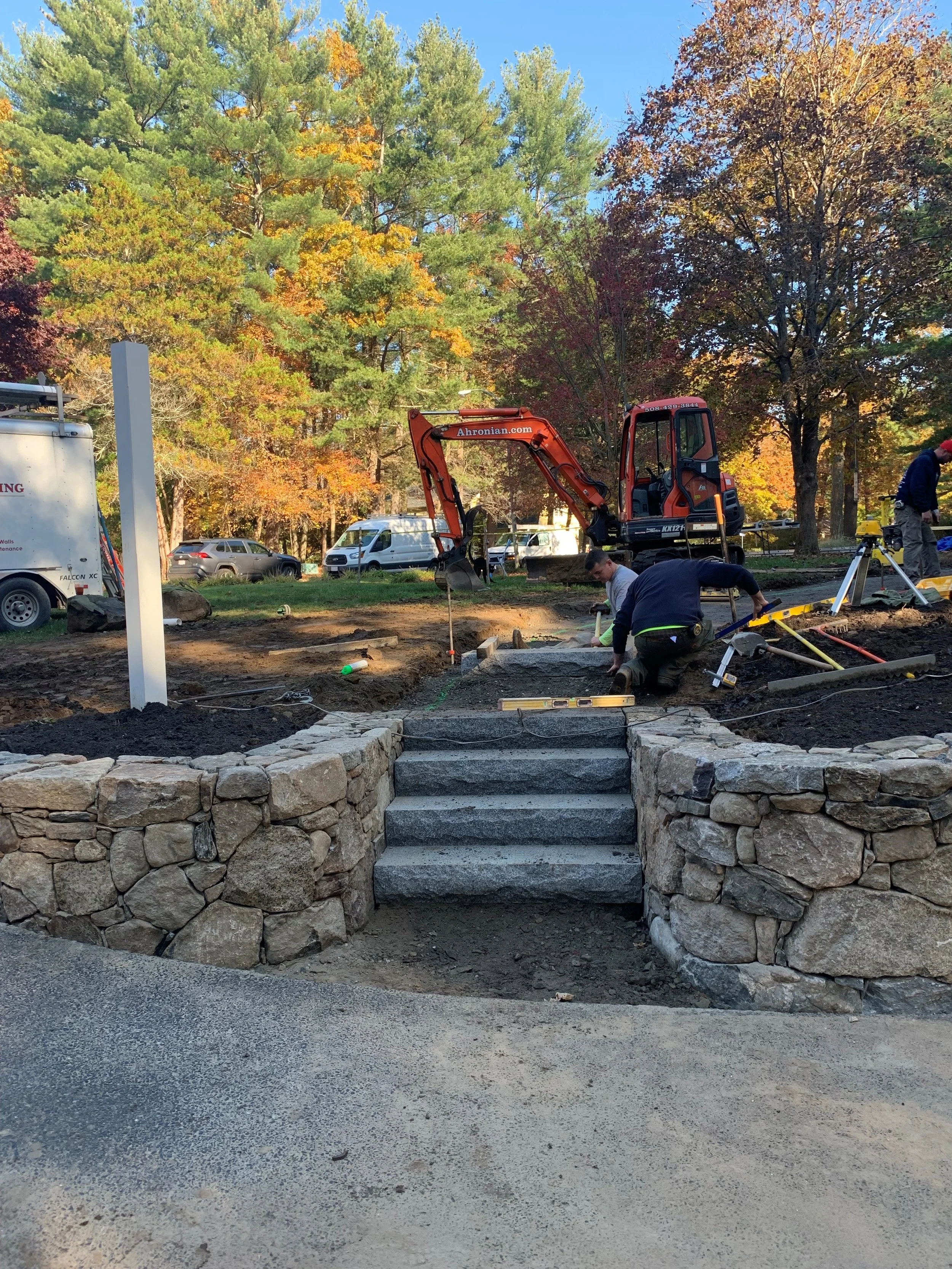
Building a retaining wall involves much more than stacking blocks or stones. Proper grading, drainage, base preparation, and structural design all play a critical role in ensuring the wall performs as intended for years to come.
An improperly installed retaining wall may shift, crack, lean, or fail altogether, leading to costly repairs and potential property damage.
At Ahronian Landscaping & Design, every retaining wall project is completed with careful planning, quality materials, and expert craftsmanship to ensure lasting durability and performance.
Invest in Long-Term Protection for Your Property
A retaining wall is an investment that improves both the beauty and functionality of your property. From preventing erosion to enhancing outdoor living spaces, it provides benefits that homeowners can enjoy for years to come.
If you're considering a retaining wall or have concerns about drainage, soil movement, or landscape stability, Ahronian Landscaping & Design is here to help. Our experienced team can recommend the right solution for your property and build a retaining wall designed to withstand New England's changing seasons.
Contact Ahronian Landscaping & Design today for a free estimate and learn how a professionally built retaining wall can help protect and enhance your home.

Pruning With Purpose: How Strategic Pruning Shapes Healthier, More Beautiful Landscapes
Discover how strategic pruning improves plant health, enhances landscape beauty, and protects your investment. Learn why professional shrub and tree pruning is an essential part of landscape maintenance.

Last summer, we explored the art and purpose of pruning and how this important landscape maintenance contributes to the health and appearance of your yard. While pruning may seem simple, as trimming branches or shaping shrubs, there is much more happening beneath the surface. Every cut influences a plant's future growth, health, structure, and appearance.
At Ahronian Landscaping & Design, we view pruning as both a science and an art. Proper pruning is not about making every plant smaller—it's about helping each plant thrive in its environment while contributing to the overall beauty of the landscape.
Not Every Plant Should Be Pruned the Same Way
One of the most common misconceptions about pruning is that all shrubs and trees can be treated similarly. In reality, every species has its own growth habits, flowering patterns, and maintenance needs.
Some shrubs bloom on old wood, meaning their flower buds are formed during the previous growing season. Others bloom on new wood and produce flowers on current-season growth. Pruning at the wrong time can remove flower buds and significantly reduce blooming for an entire year.
Understanding the specific needs of each plant allows pruning decisions to be made with confidence and purpose. This knowledge helps preserve the beauty of flowering shrubs while encouraging healthy future growth.
Timing Matters
Proper timing is one of the most important aspects of successful pruning.
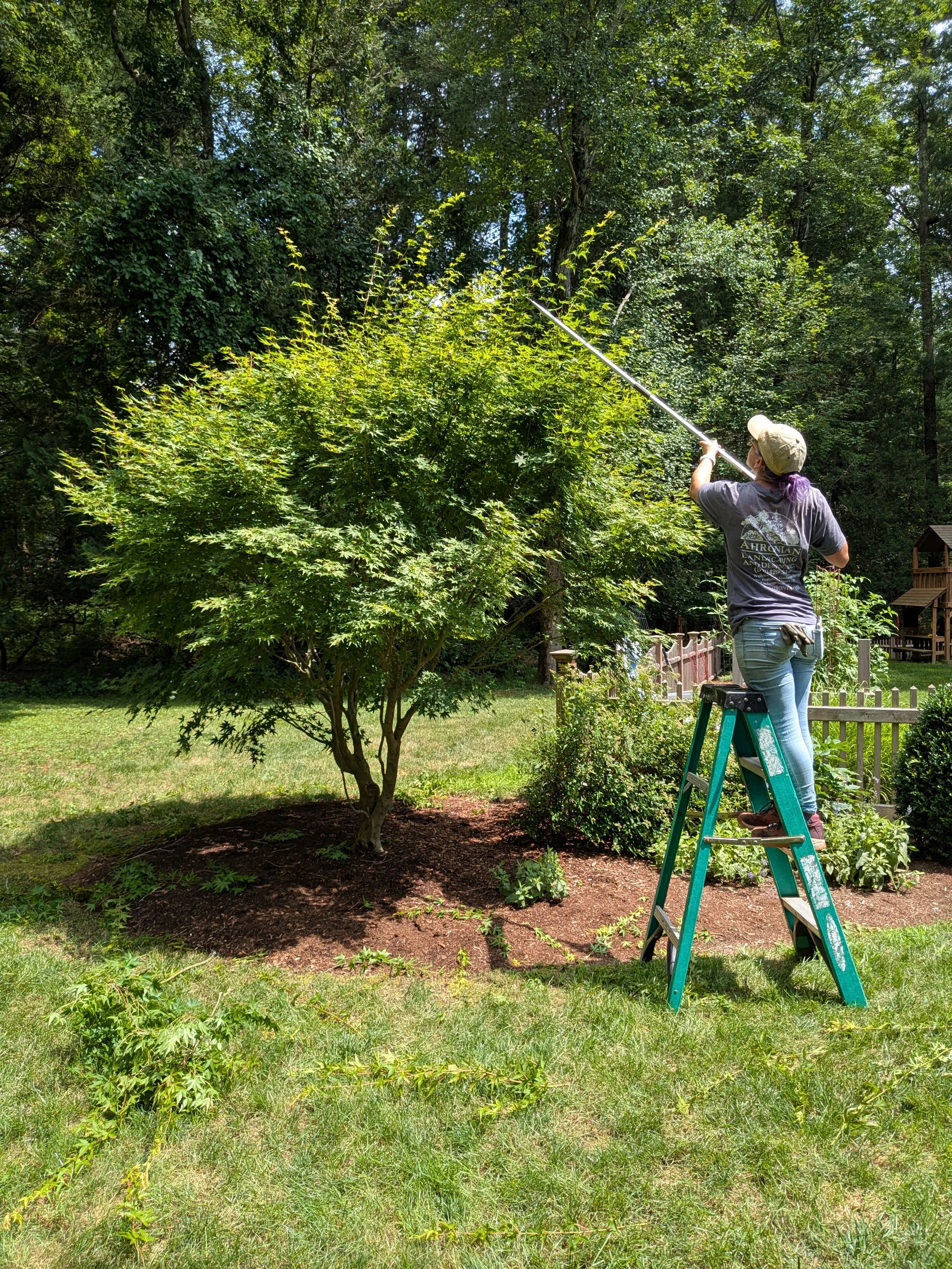
Many homeowners are surprised to learn that summer and early fall can be ideal times to prune certain plants. Depending on the species, pruning during active growth can improve plant structure, remove damaged growth, and maintain the intended scale of the landscape.
Other plants benefit from dormant-season pruning, while some flowering shrubs should be pruned immediately after blooming. There is no one-size-fits-all approach.
By understanding each plant's growth cycle, pruning can be scheduled when it provides the greatest benefit and the least amount of stress.
Pruning for Plant Health
One of the primary goals of pruning is improving plant health.
Removing dead, damaged, or diseased branches helps prevent the spread of decay and allows the plant to focus its energy on healthy growth. Pruning also improves airflow throughout the canopy, reducing excess moisture that can contribute to fungal diseases.
Better light penetration is another important benefit. When sunlight reaches interior branches and lower portions of the plant, growth remains fuller, healthier, and more balanced.
Over time, these health-focused pruning practices can significantly improve the vigor and longevity of trees and shrubs.
Pruning for Structure and Safety
Strategic pruning also helps create stronger, safer plants.
Crossing branches, weak attachments, and crowded growth can create structural problems that become more serious as plants mature. By identifying and correcting these issues early, pruning helps reduce the risk of breakage during storms, heavy snow, or high winds.
For trees, structural pruning can help establish strong branch architecture that supports healthy growth for decades. For shrubs, it helps maintain shape and prevent overcrowding.
Supporting the Landscape Design
Pruning plays an important role in maintaining the original vision of a landscape.
Over time, even carefully selected plants can outgrow their spaces. Strategic pruning helps maintain proper scale, preserve views from windows, keep walkways accessible, and ensure that plants continue to complement surrounding trees, shrubs, and hardscape features.
A well-maintained landscape should feel balanced and intentional. Pruning helps preserve that balance as plants mature.
Common Pruning Mistakes
While pruning is beneficial, improper pruning can create long-term problems.
Some common mistakes include:
Shearing every shrub into the same shape, regardless of species
Pruning at the wrong time of year
Removing too much growth at once
Ignoring dead or damaged branches
Topping certain trees, which can weaken the structure and encourage unhealthy regrowth
These practices often create more work in the future and can negatively impact plant health and appearance.
Why Professional Pruning Matters
Effective pruning requires more than tools—it requires knowledge.
Professional pruning involves understanding plant identification, growth habits, flowering cycles, seasonal timing, and long-term landscape goals. It also provides an opportunity to monitor plant health and identify signs of pests, disease, or environmental stress before they become larger problems.
As part of a comprehensive landscape maintenance program, pruning helps protect your investment and allows your landscape to continue developing beautifully year after year.
Investing in Long-Term Beauty
A thriving landscape doesn't happen by accident. It requires consistent care, thoughtful planning, and attention to detail.
Pruning is one of the most valuable maintenance services you can provide for your trees, shrubs, and perennial plantings. When performed correctly, it encourages healthy growth, improves appearance, enhances safety, and helps your landscape reach its full potential.
At Ahronian Landscaping & Design, we approach pruning with purpose—using decades of horticultural experience to ensure every cut contributes to the long-term success of your landscape.

From Vision to Reality: Full-Service Landscaping That Transforms Your Outdoor Living
Discover full-service landscaping services from design to maintenance. Learn how expert landscape design and outdoor living solutions transform your yard into a functional, beautiful space.
As the weather warms and homeowners begin spending more time outside, May is when landscapes truly come into focus. It’s also when many people start asking an important question: What can my yard become?
The answer lies in working with a team that can bring that vision to life from start to finish. At Ahronian Landscaping & Design, we are a full-service, custom landscape design-and-build company—meaning every aspect of your outdoor space is thoughtfully planned, expertly constructed, and carefully maintained.
What Does Full-Service Landscaping Mean?
Full-service landscaping goes beyond a single project or seasonal task. It’s a comprehensive approach that considers your property as a whole—from the first design sketch to long-term care.
With the right team, your landscape becomes a cohesive environment where every element works together: patios connect to plantings, trees provide structure and shade, and maintenance keeps everything performing at its best.
Custom Landscape Design & Build
Every project begins with a vision. Our landscape design process is tailored to your property, your lifestyle, and how you want to use your outdoor space.
Personalized design plans based on your goals
Thoughtful layouts that balance beauty and function
Seamless transition from design to construction
Because our team handles both design and build, the process is efficient, collaborative, and aligned from start to finish.
Outdoor Living & Hardscaping
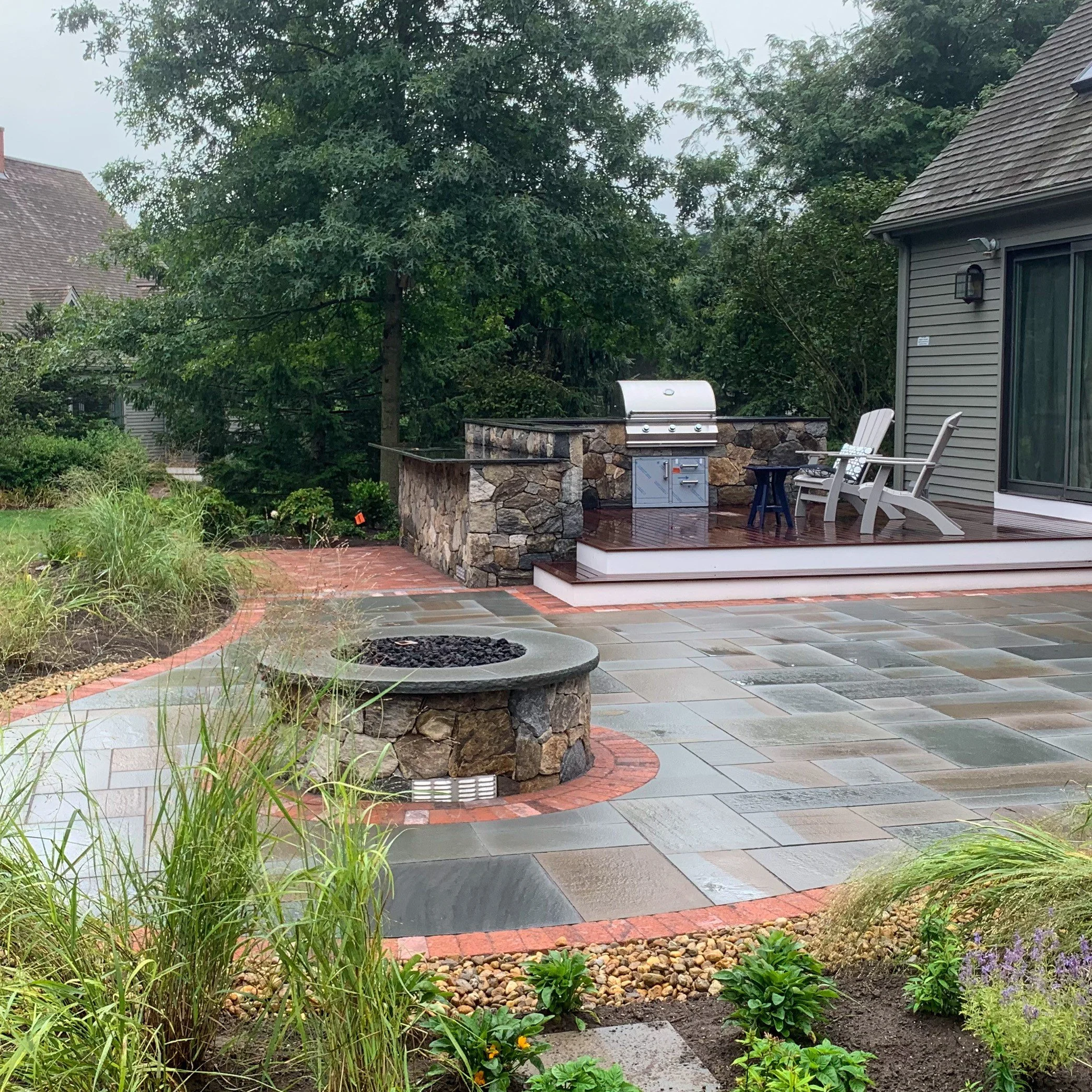
Hardscape elements form the foundation of outdoor living based on your lifestyle needs and wants. These features define how you move through and use your space and highlight how your outdoor space can be used in a more functional way.
Custom patios, walkways, and driveways
Retaining walls and stone steps
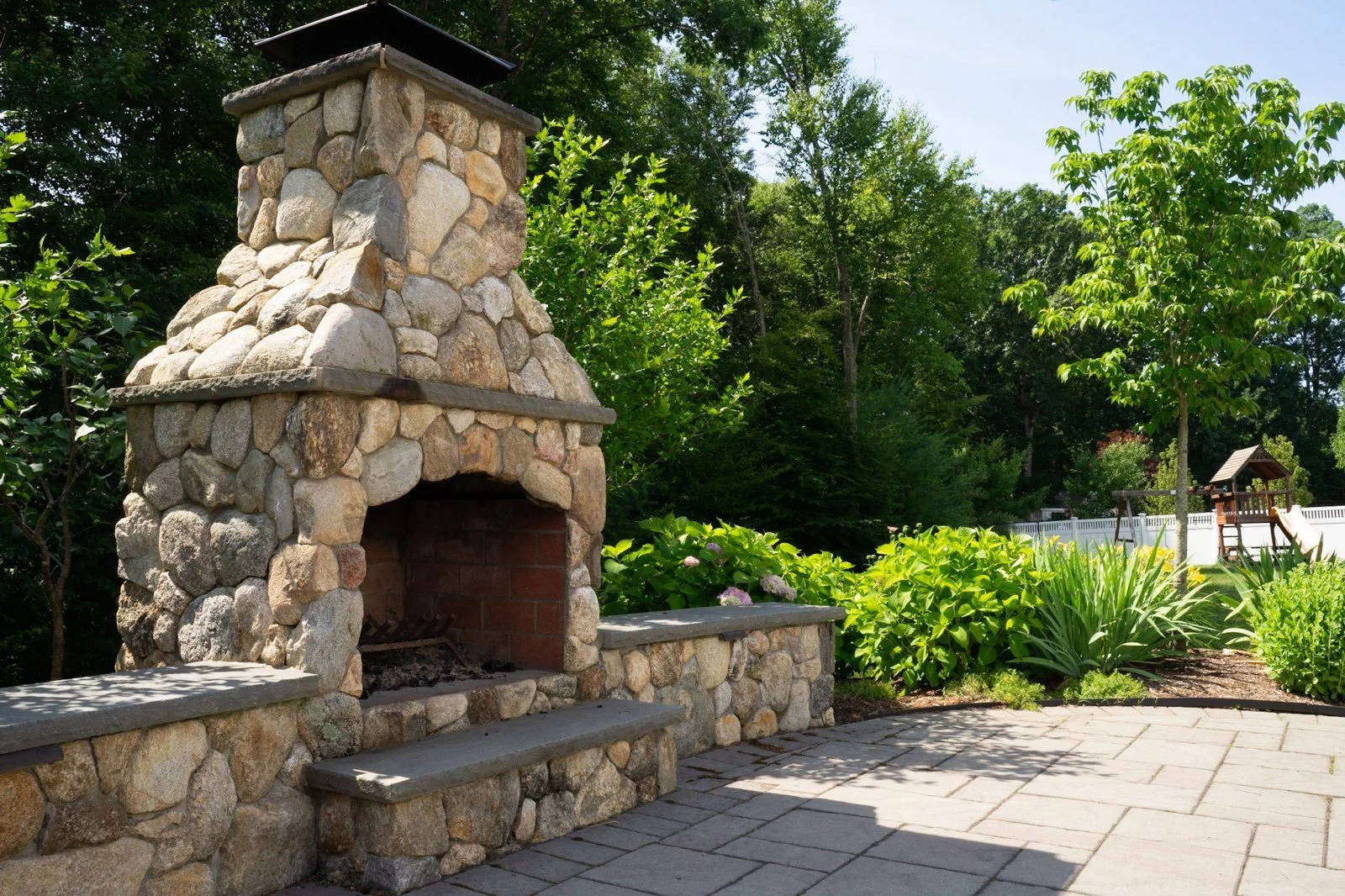
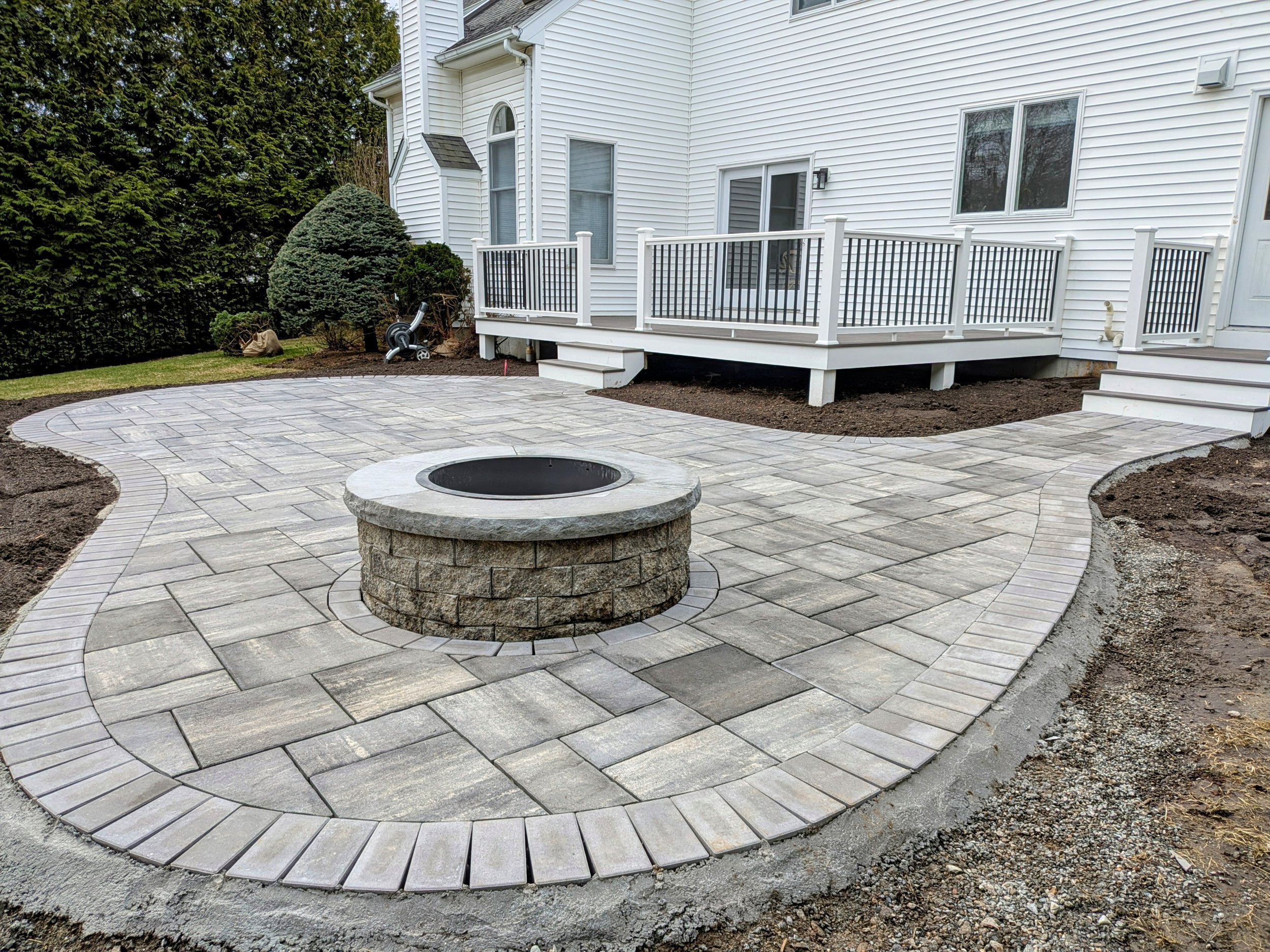
Fire pits and outdoor fireplaces
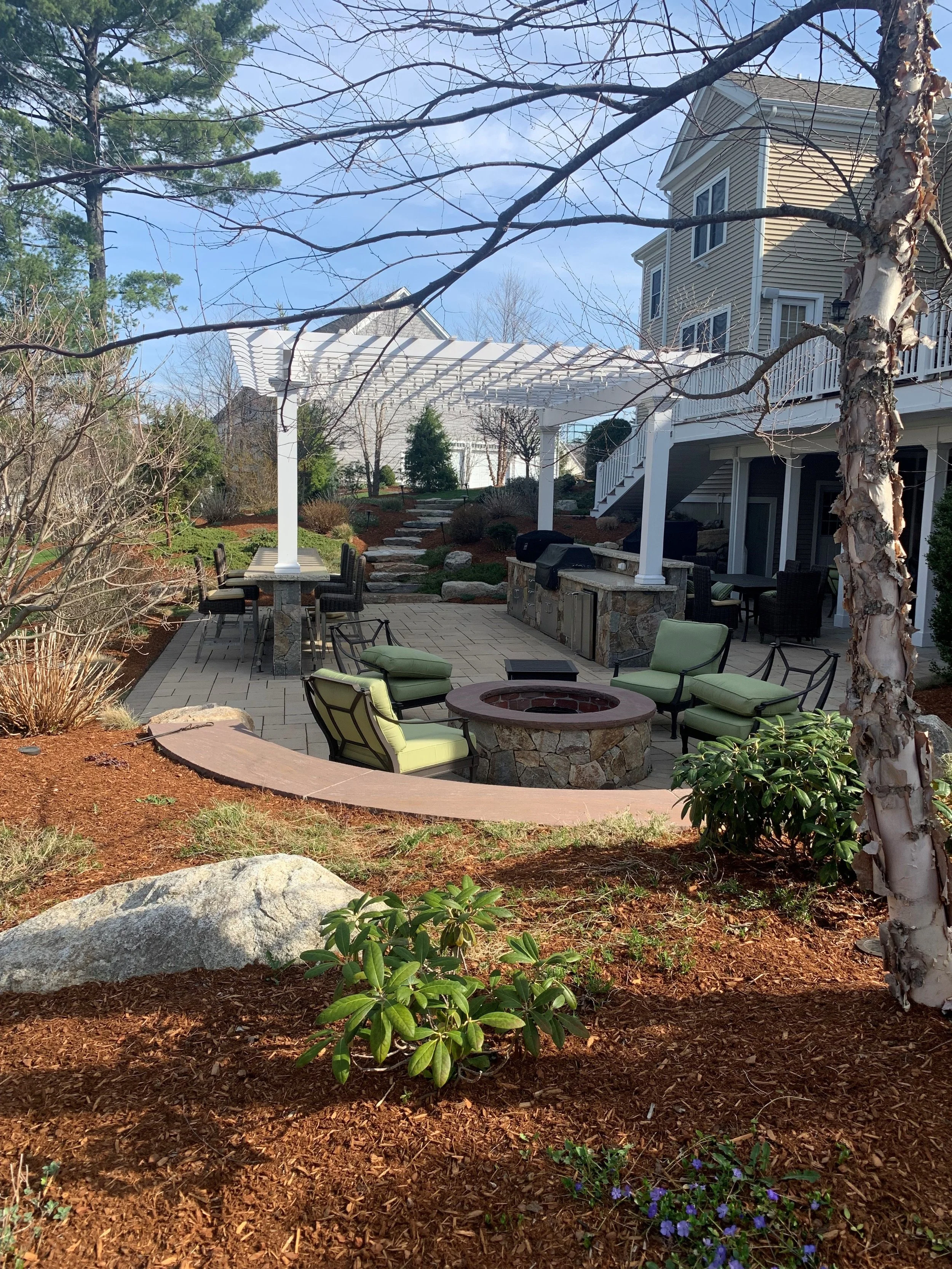
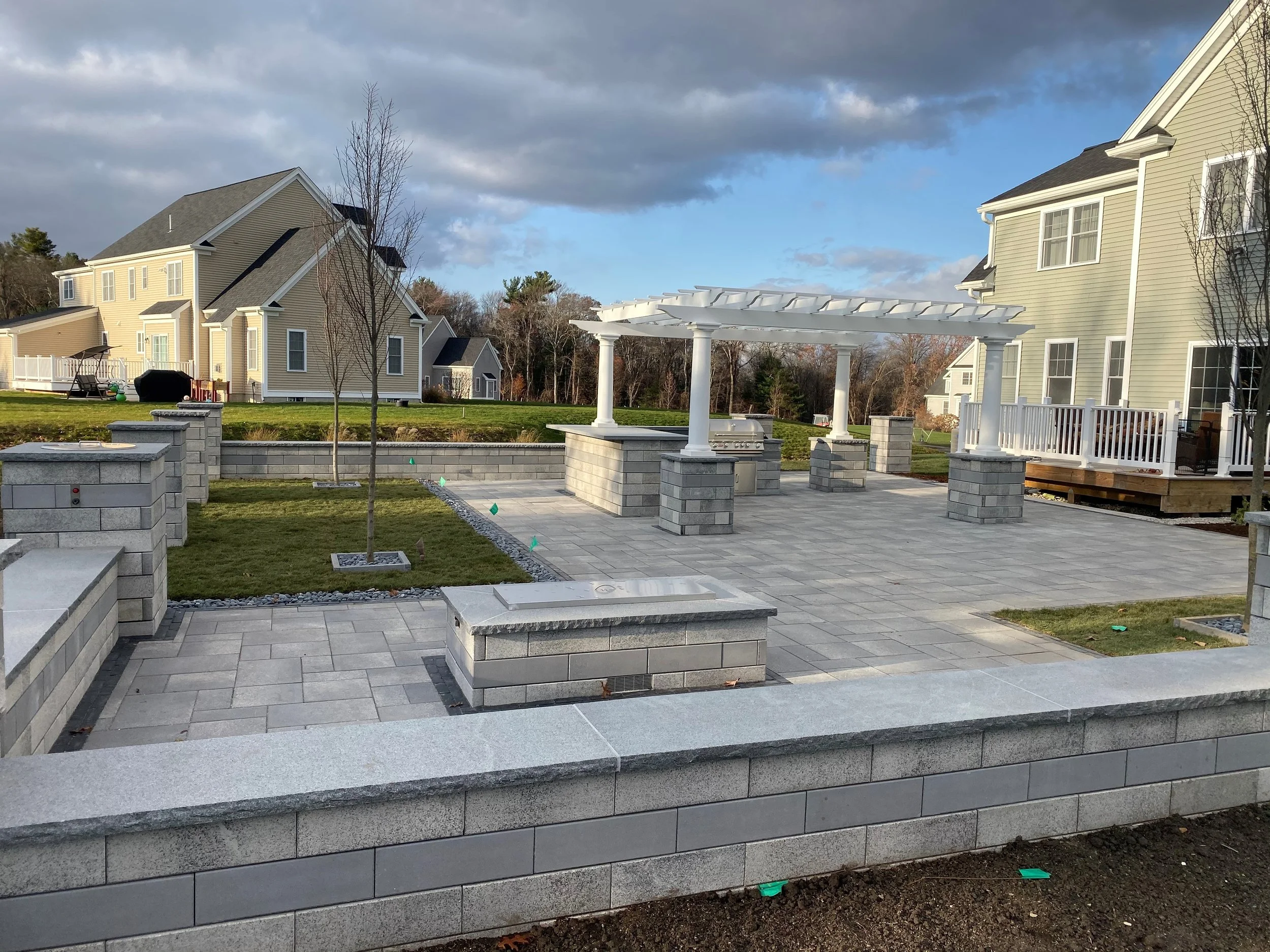
Outdoor kitchens and gathering areas
From guiding foot traffic and improving access across your property to managing elevation changes and creating dedicated areas for entertaining, cooking, and relaxing, these features make your yard more practical, comfortable, and enjoyable for everyday use.
Plantings & Garden Design
Softscape elements add life, color, and seasonal interest. Thoughtful garden design ensures your plantings thrive and evolve beautifully over time.
Trees, shrubs, and perennial plantings
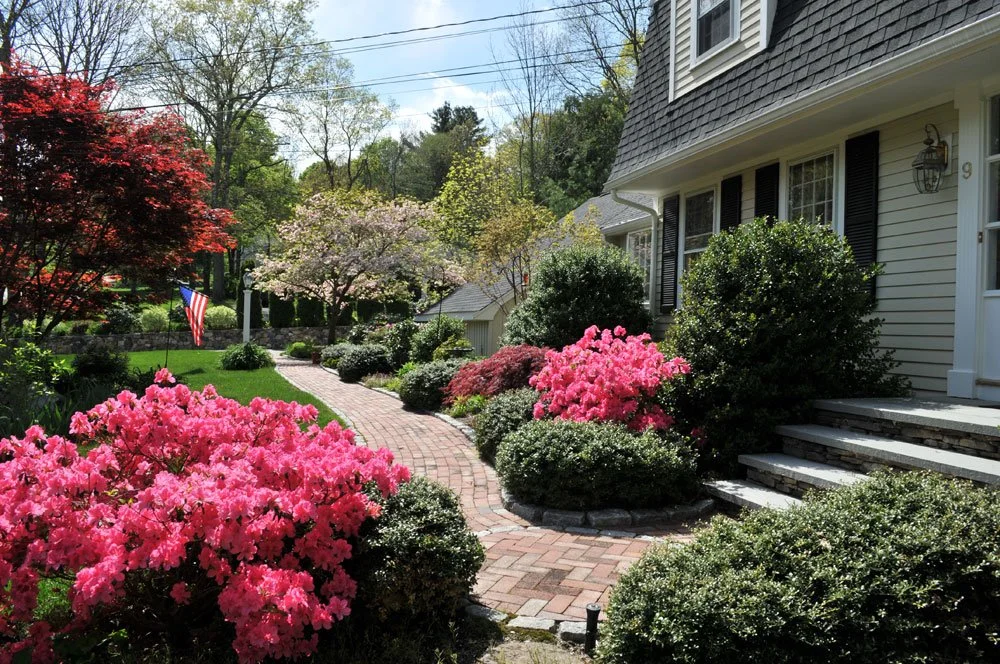
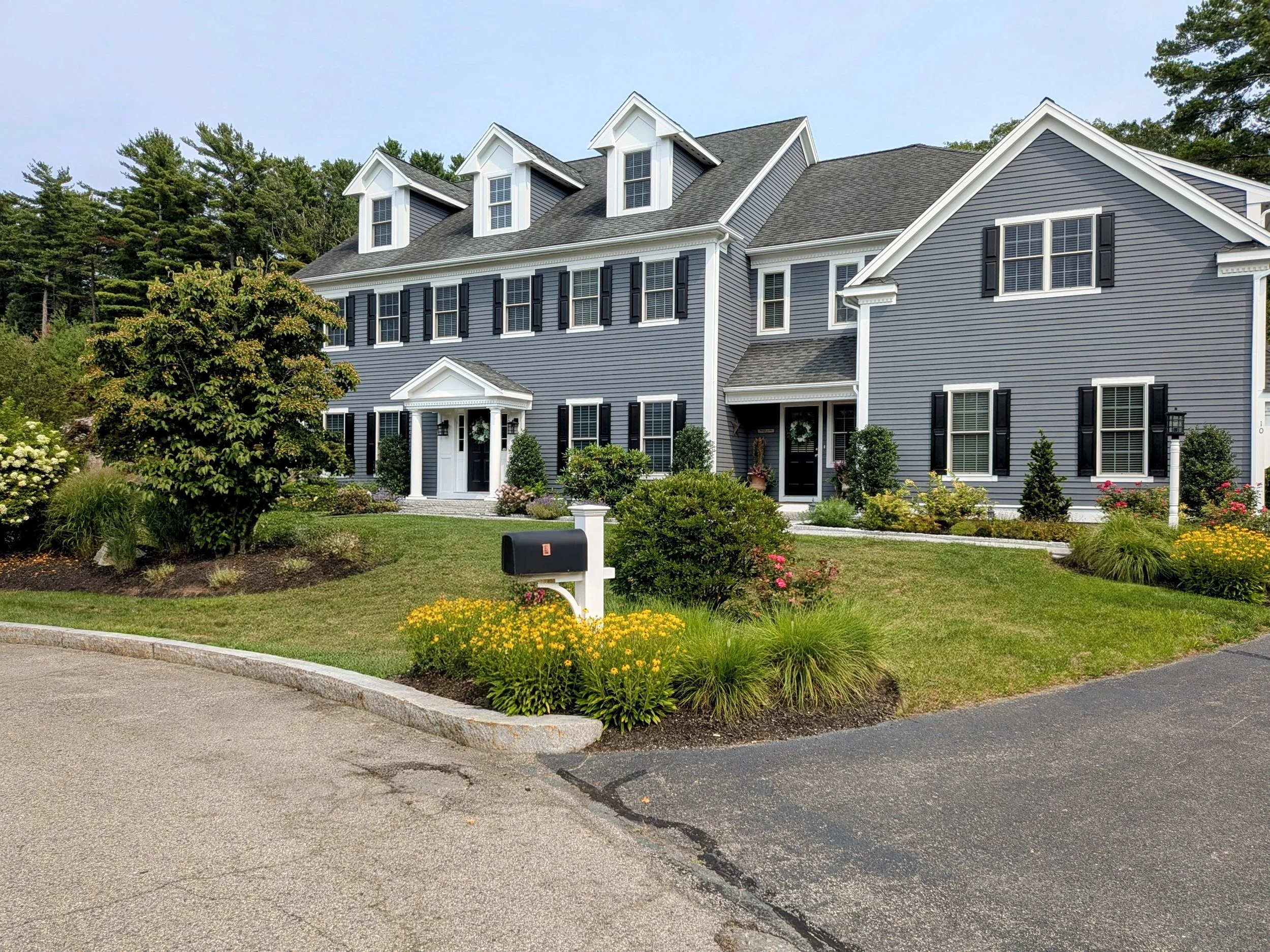
Foundation plantings to enhance curb appeal
Seasonal color and layered garden beds
Native and sustainable plant selections
Every planting plan is created with growth, scale, and long-term health in mind.
Lawn Care & Drainage Solutions
A healthy landscape starts from the ground up.
Lawn installation and fertilization programs
Drainage solutions to manage water and protect your property
Soil improvements for better plant performance
These foundational services ensure your landscape not only looks good, but functions properly in all conditions.
Ongoing Landscape Maintenance
Once your landscape is installed, proper landscape maintenance is key to protecting your investment.
Spring and fall clean-ups
Seasonal pruning and plant care
Lawn care and mowing
Ongoing monitoring of plant health
With consistent care, your landscape continues to grow, mature, and reach its full potential.
Fine Gardening & Seasonal Enhancements
For those who want a truly polished look, detailed garden care makes all the difference.
Weeding, deadheading, and bed maintenance
Deer and rabbit control
Seasonal container plantings and annuals
Regular visits to keep your yard pristine
These services ensure your landscape always looks its best—without the stress of managing it yourself.
A Seamless, Long-Term Approach
What sets full-service landscaping apart is how everything works together. From initial landscape design to construction and ongoing care, every detail is considered.
The result is more than just a beautiful yard—it’s an outdoor space designed for relaxation, entertaining, and everyday enjoyment.
Start Your Landscape Transformation
May is the perfect time to begin turning ideas into reality. Whether you’re starting fresh or enhancing an existing property, working with a full-service team ensures your vision is carried through every step of the process.
At Ahronian Landscaping & Design, we bring decades of experience, craftsmanship, and attention to detail to every project. From concept to completion—and beyond—we create landscapes designed to be enjoyed for years to come.





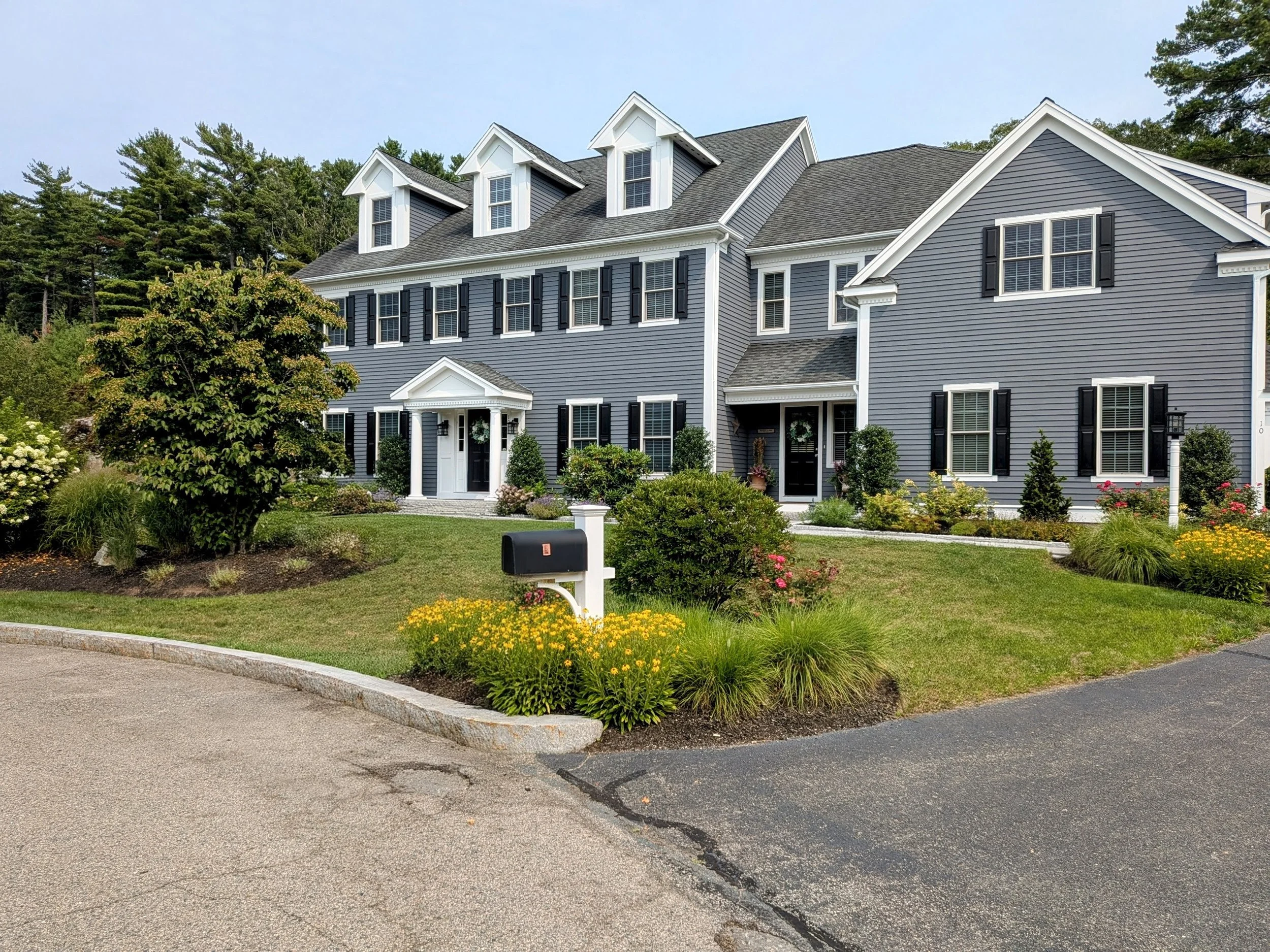
Fine Gardening: The Details That Keep Your Landscape at Its Best
Discover how fine gardening services elevate your landscape. From detailed garden care and weeding to seasonal containers and wildlife protection, expert landscape maintenance keeps your yard pristine all season.
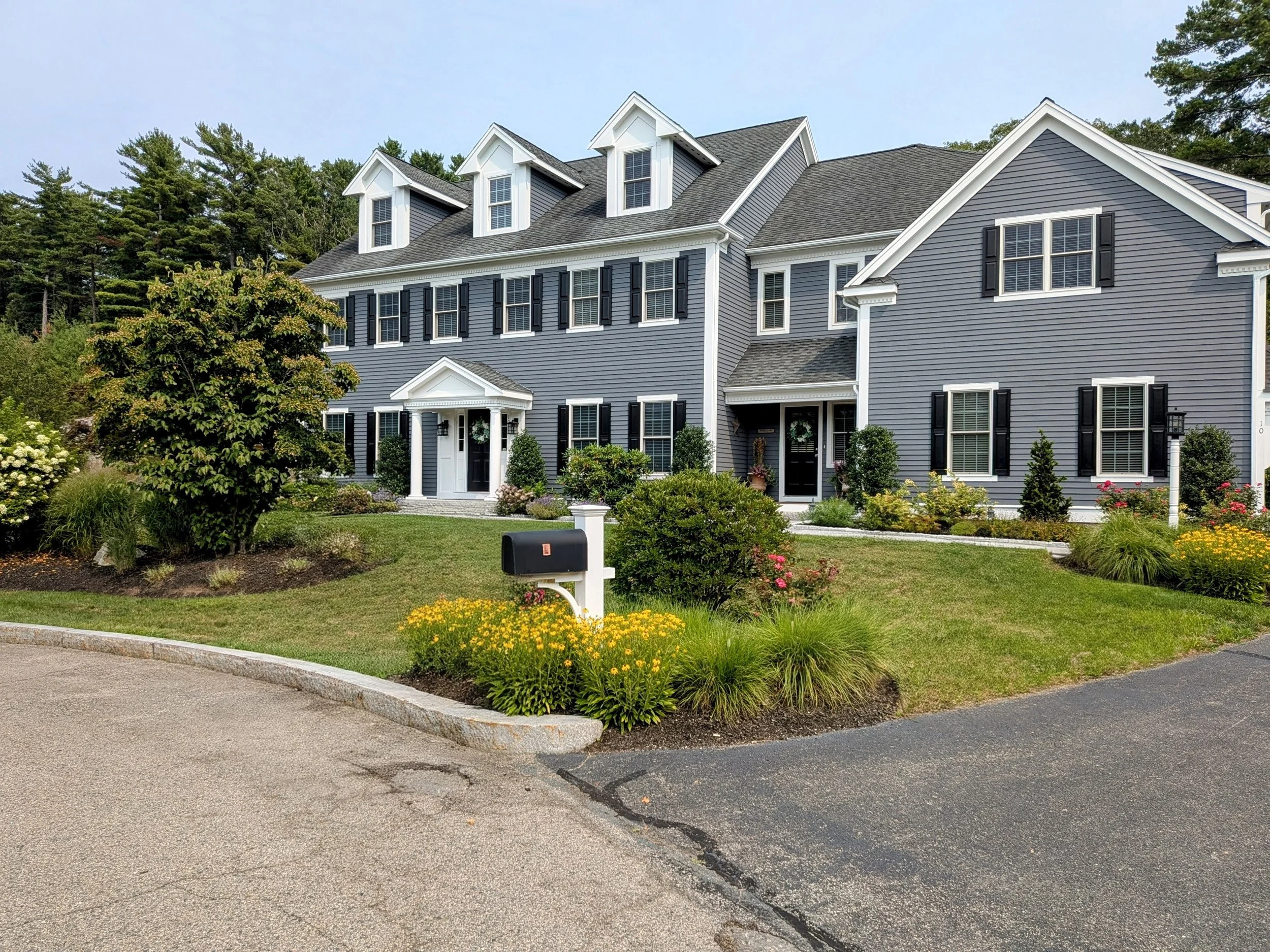
As spring settles in and gardens come to life, it becomes clear that a beautiful landscape isn’t maintained by occasional visits alone. While seasonal visits keep your yard looking great, more regular visits make your yard look truly pristine. It all comes down to the details. That’s where fine gardening services play an essential role.
At Ahronian Landscaping & Design, fine gardening focuses on the ongoing, hands-on care that allows landscapes to thrive—so homeowners can relax and enjoy their outdoor spaces without worrying about the work behind the scenes.
What Is Fine Gardening?
Fine gardening is a specialized form of landscape maintenance that goes beyond basic upkeep. It’s about consistent attention, horticultural knowledge, and a trained eye that understands how plants grow, change, and interact throughout the season.
Rather than reacting to problems, fine gardening is proactive—keeping landscapes healthy, clean, and vibrant from spring through fall.
Core Fine Gardening Services
Our fine gardening services include a range of detailed tasks that keep garden beds, hardscapes, and plantings looking their best:
Weeding – Removing invasive and unwanted plants from garden beds, including weeds growing within established plantings, before they compete for nutrients and space.
Deadheading – Removing spent flowers from perennials to encourage reblooming and extend the beauty of flowering plants.
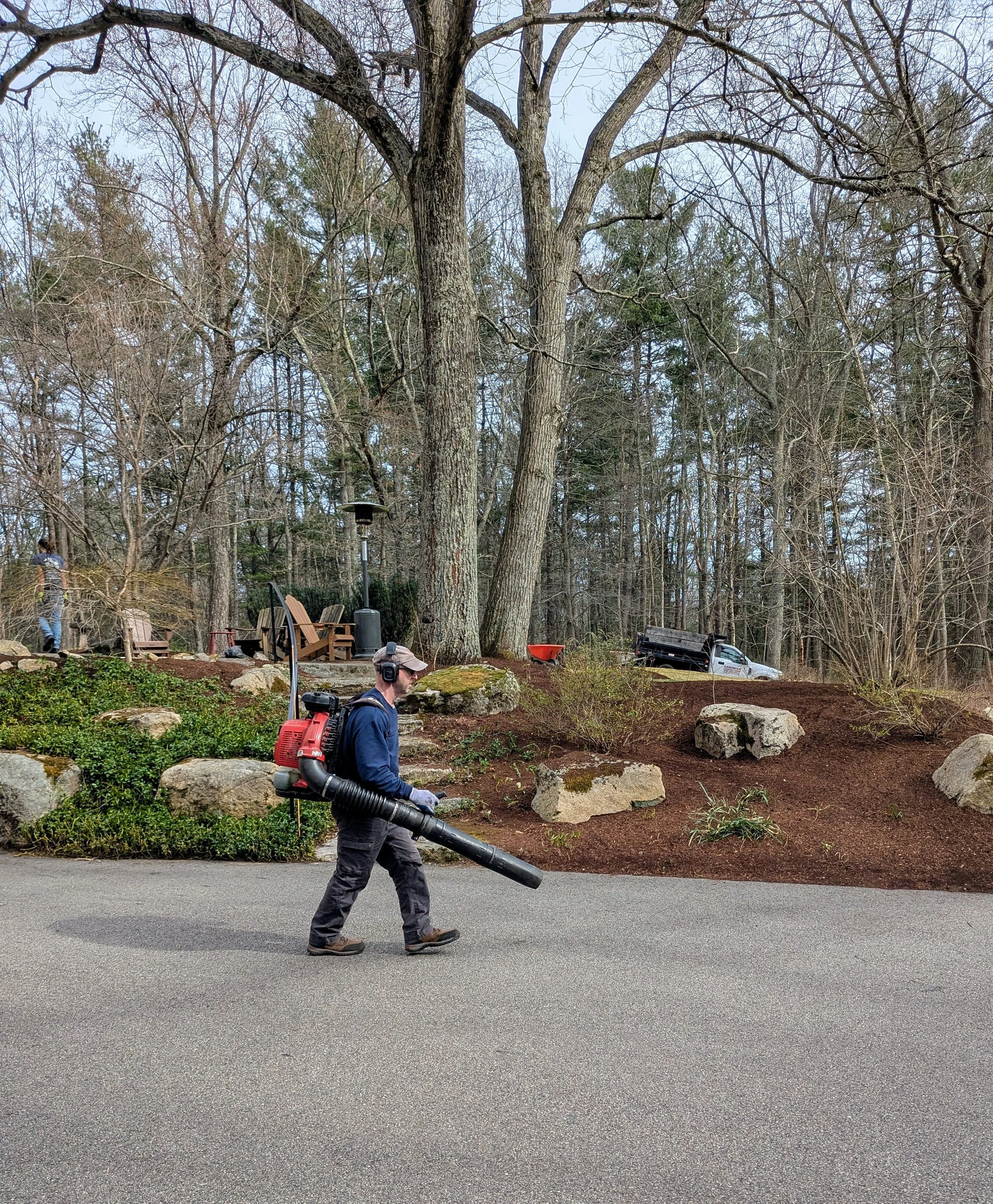
Maintaining Hard Surfaces – Blowing off walkways, driveways, patios, and steps to keep them neat and clear; applying horticultural vinegar to manage weeds in hardscapes.
Deer and Rabbit Control – Applying repellents to vulnerable plants to help reduce browsing damage, especially in areas with high wildlife pressure.
Fall Perennial Cutbacks – Seasonally appropriate cutbacks to prepare plants for overwintering and healthier regrowth in spring.
Each visit is tailored to the needs of your landscape at that specific moment in the season.
A Thoughtful, Ongoing Approach
One of the most valuable aspects of fine gardening is observation. Regular visits allow our team to:
Identify plant pests and pathogens early
Notice stressed or struggling plants before issues escalate
Recommend improvements in plant placement or spacing
Ensure plants are developing as intended
This level of care keeps landscapes not only looking clean and neat, but performing at their peak.
Flexible Service Options
Fine gardening services are available in formats that fit your needs and schedule:
Biweekly or monthly visits
Typically running from May through October
Can be incorporated into an annual maintenance plan, alongside services such as pruning at horticulturally optimal times, spring and fall clean-ups, mowing, and lawn care
This flexibility allows homeowners to choose the level of support that best suits their property and lifestyle.
Enhancing Seasonal Color
Fine gardening often works hand-in-hand with seasonal enhancements:
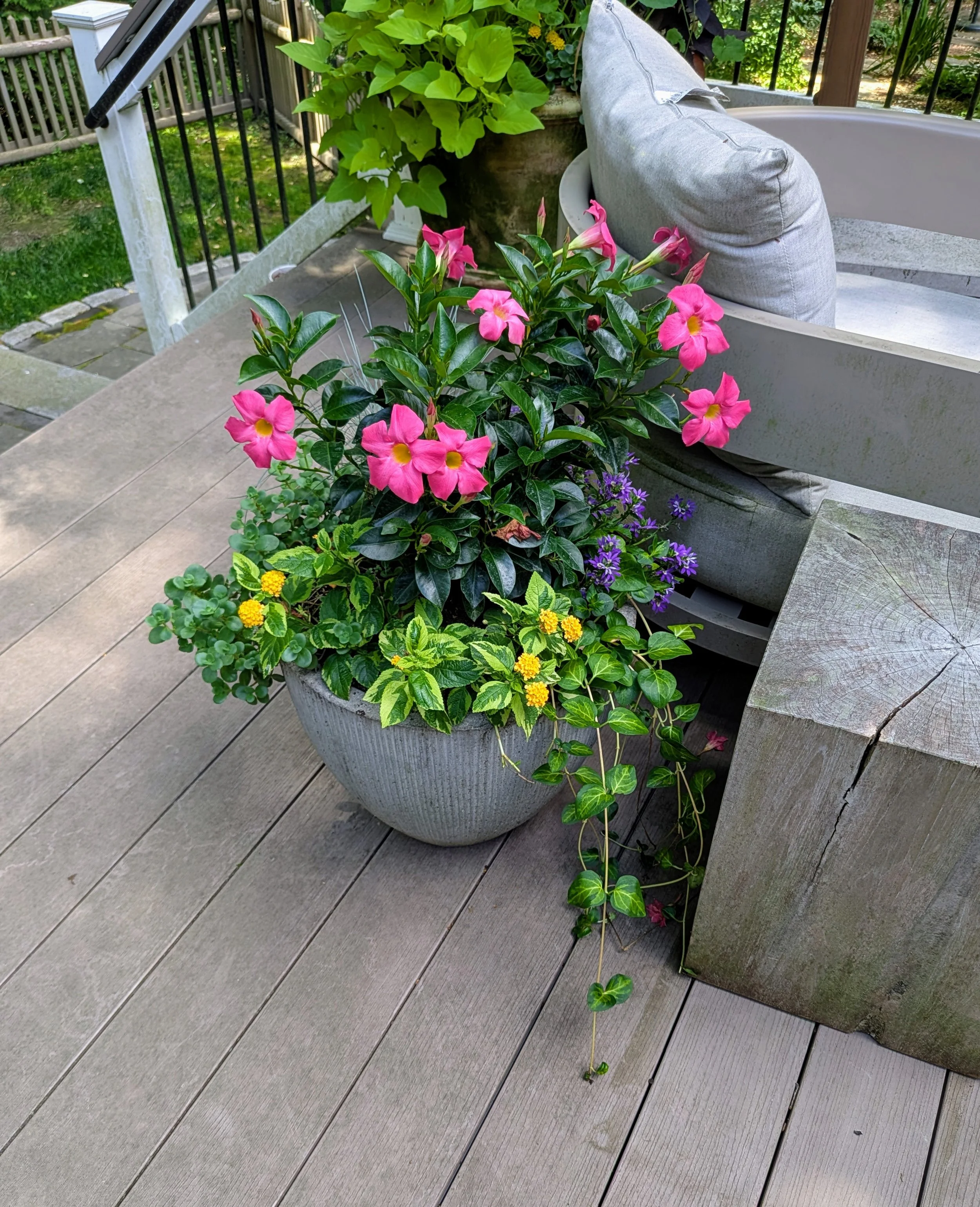
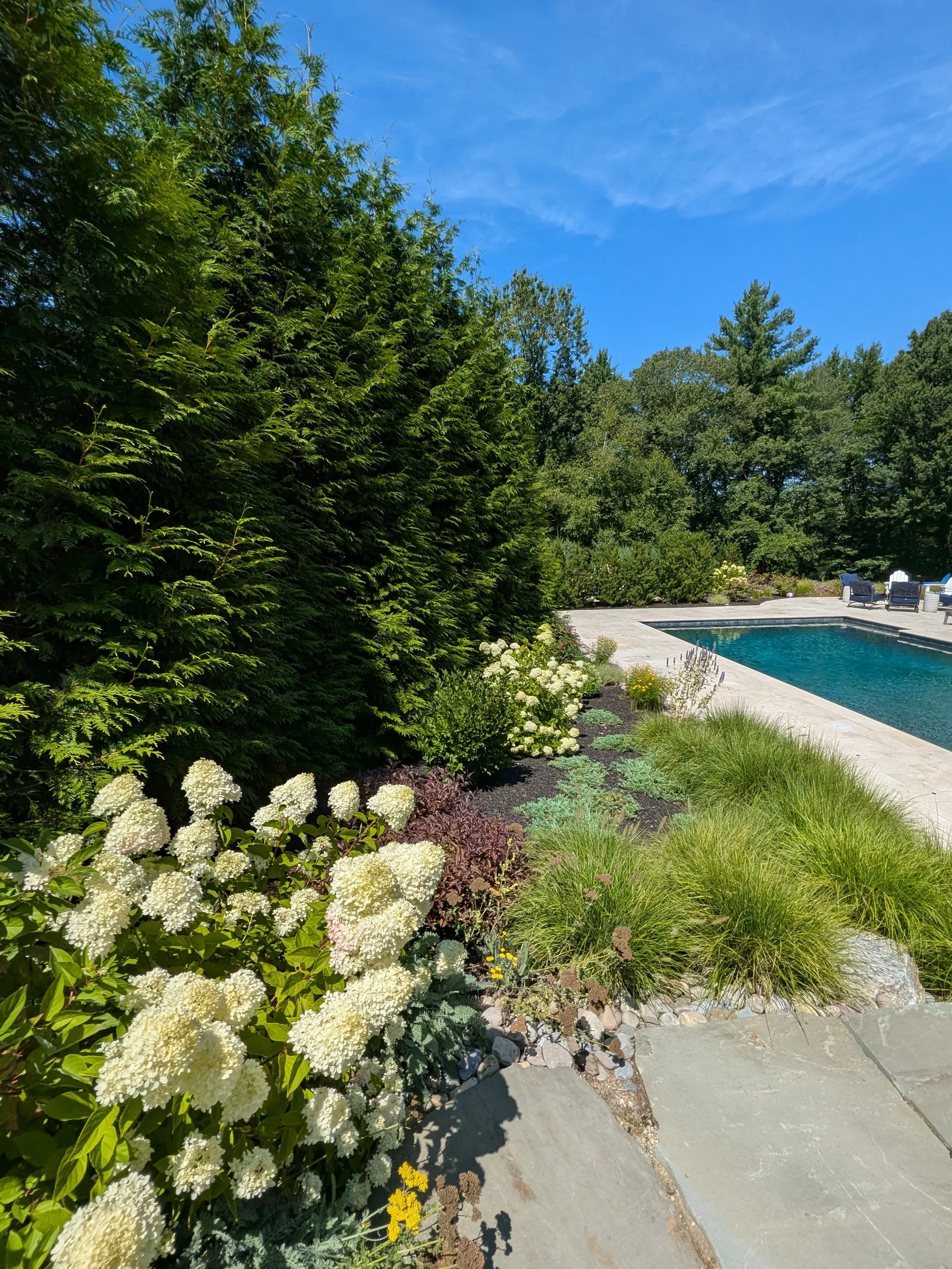
Seasonal container gardens – Custom-designed spring, summer, fall, and winter containers installed in place to complement your home’s aesthetic and add welcoming color to entryways, walkways, and pool areas.
Seasonal annuals – Spring, summer, and fall annual plantings woven into existing garden beds to add vibrancy and celebrate the changing seasons.
These additions bring fresh energy to the landscape while maintaining cohesion with the overall design.
A Team You Can Trust
Fine gardening requires experience, attention to detail, and deep plant knowledge. Our team is skilled in caring for a wide range of plant types, understanding which plants are most vulnerable to deer and rabbits, and ensuring every annual and perennial is installed and maintained for long-term success.
Most importantly, we care deeply about the landscapes we maintain—and it shows in the results.
Enjoy Your Yard, Worry-Free
The goal of fine gardening is simple: to take care of the regular, time-consuming maintenance so homeowners can enjoy their yards without stress. With consistent care and expert oversight, landscapes remain healthy, beautiful, and ready to be enjoyed all season long.
At Ahronian Landscaping & Design, our fine gardening services ensure your yard is always in good hands—so you can focus on enjoying the space as it grows and evolves.
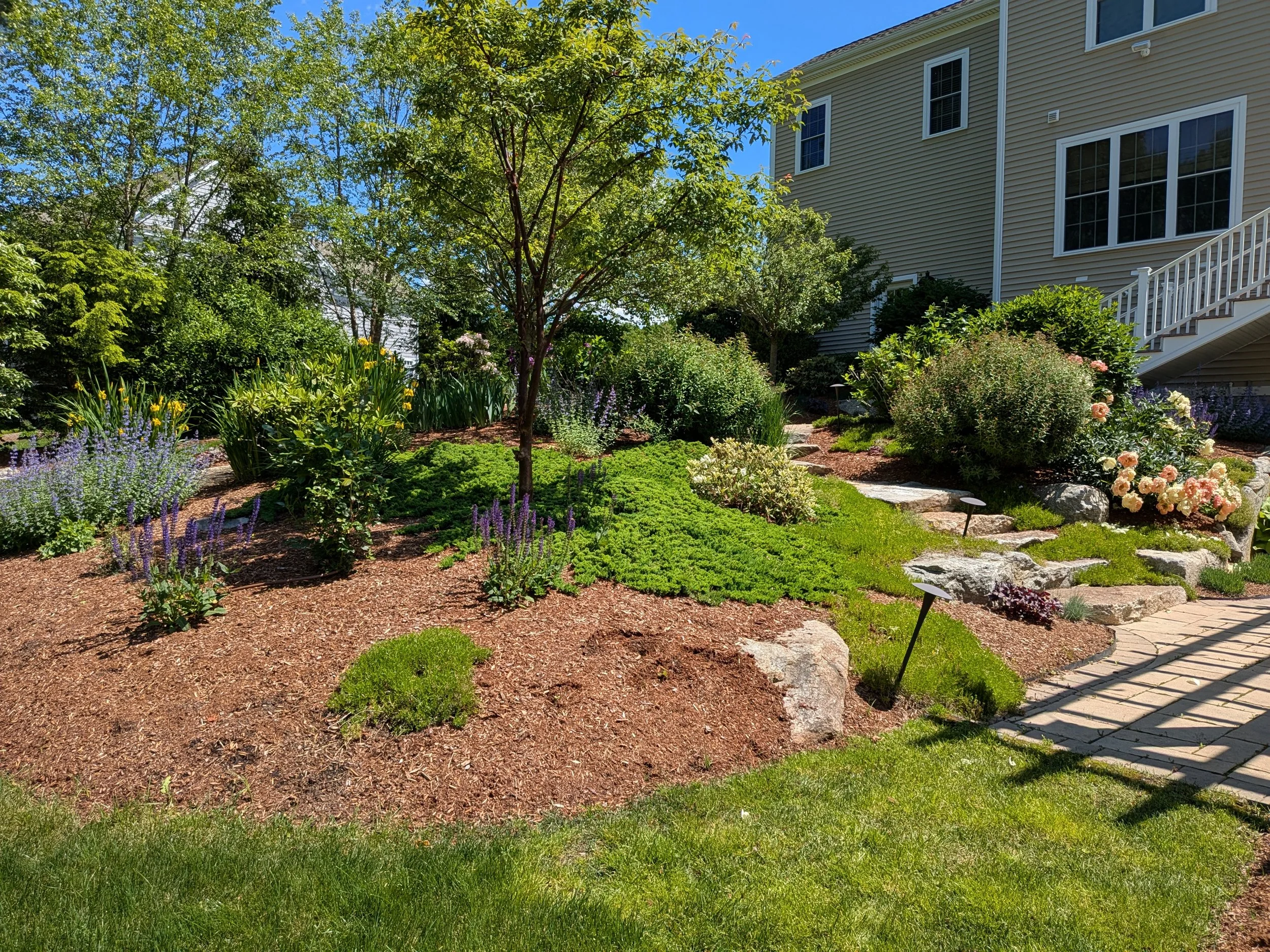
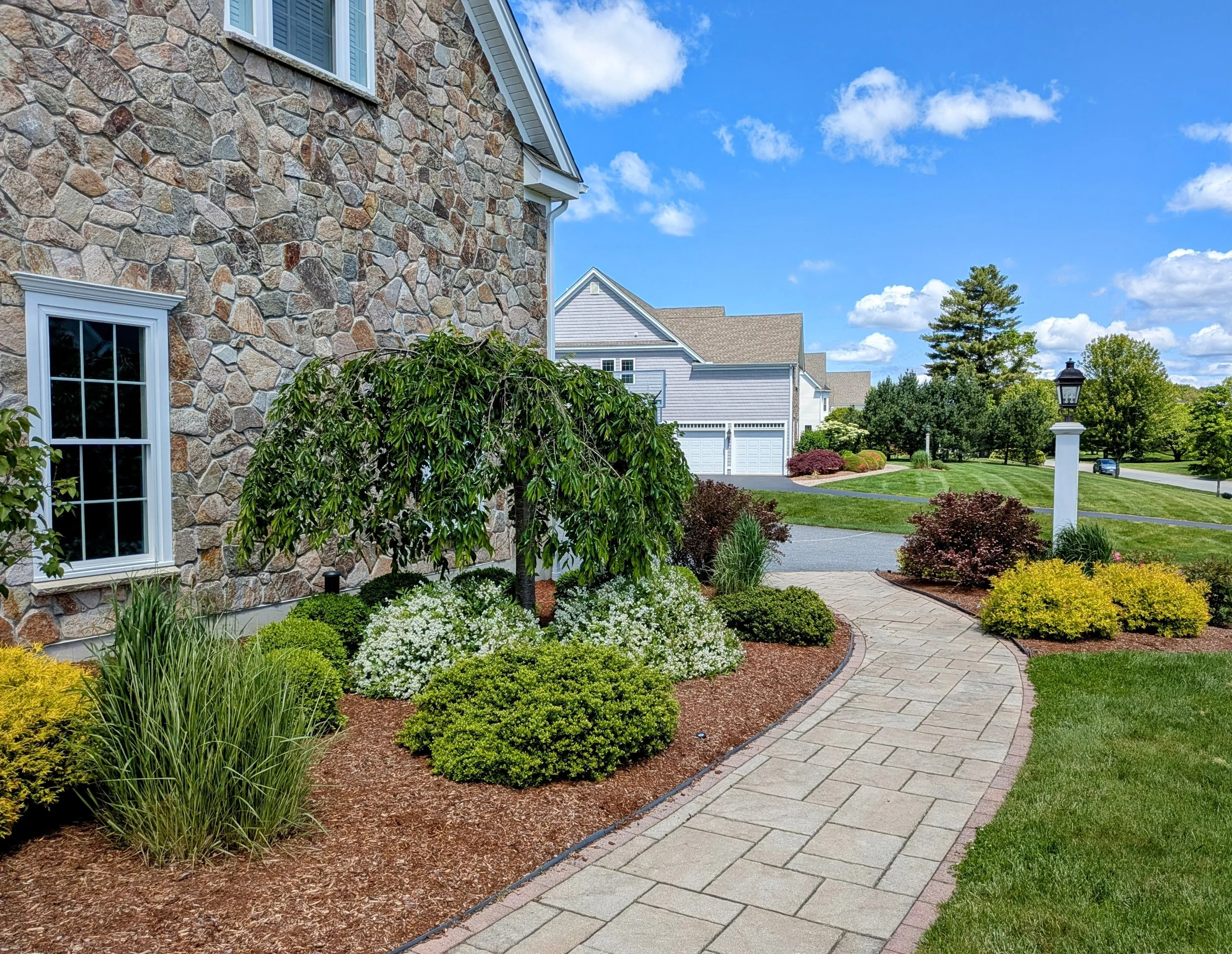
Setting the Stage for Spring: Why a Thorough Spring Clean-Up Matters
Prepare your landscape for success with a professional spring clean-up. Learn how expert landscape maintenance, proper mulching, and early garden preparation protect your investment and support healthy growth all season.
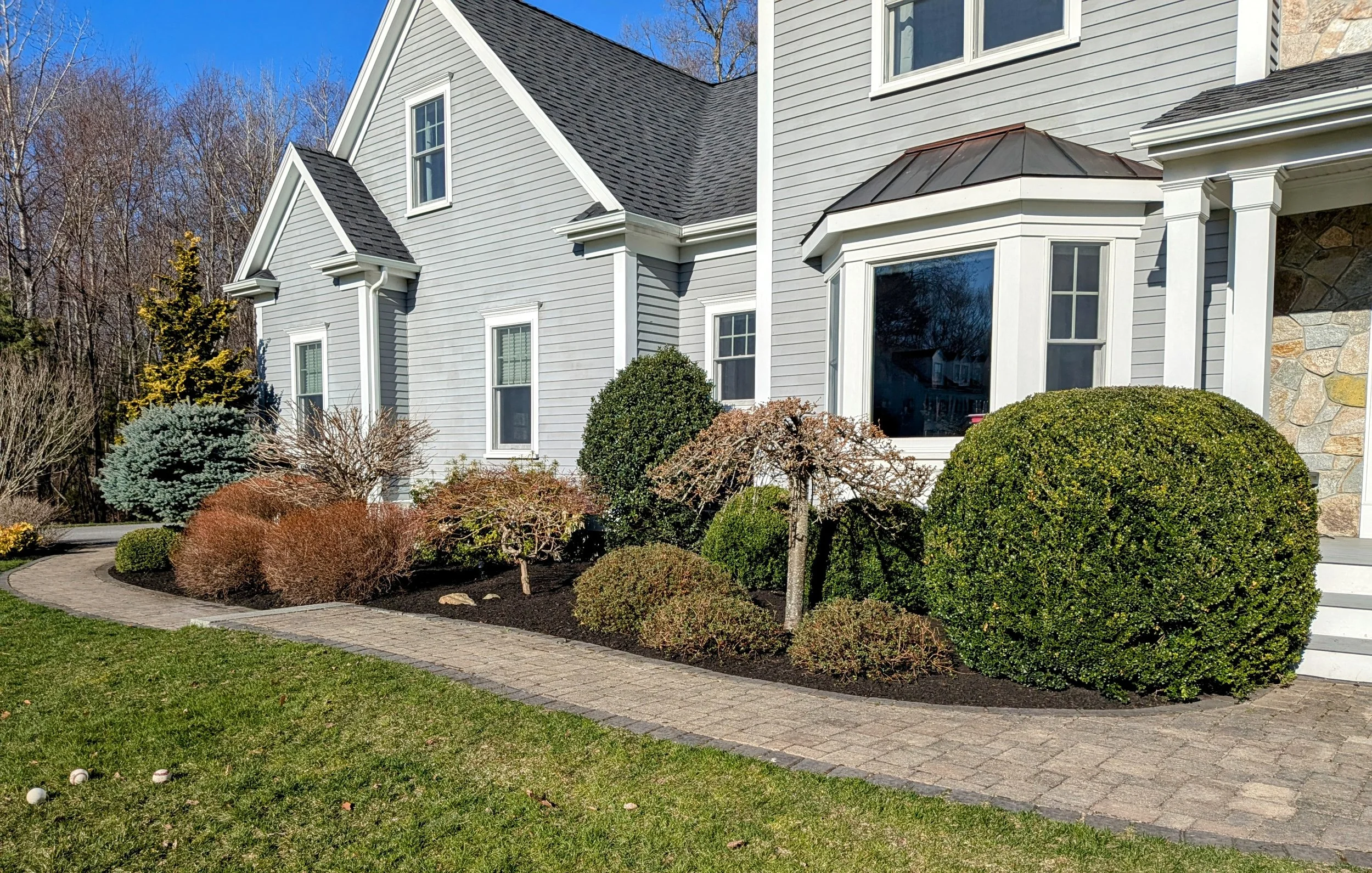
As winter loosens its grip and early signs of spring begin to appear, March is the ideal time to prepare your landscape for the growing season ahead. A professional spring clean-up is about far more than fresh mulch—it’s a comprehensive process that sets your garden up for healthy growth, long-term beauty, and lasting value. At Ahronian Landscaping & Design, spring clean-ups are a critical step in protecting your landscape investment and ensuring your property looks its best from the very start of the season.
More Than Mulching: A Complete Approach
Winter leaves behind more than fallen leaves. Snow, ice, wind, and fluctuating temperatures can stress plants and compact soil. A thorough spring clean-up addresses all of these challenges with a thoughtful, hands-on approach.
Our spring services include:
Removing winter desiccation from plants that have overwintered
Cleaning out leaves, weeds, and debris from garden beds
Reducing early weed growth by removing debris before weed seeds germinate
Removing excess mulch buildup around plant bases to improve airflow, allow proper gas exchange, and prevent root rot
This early attention makes a noticeable difference in how your landscape performs throughout the year.
Supporting Healthy Growth From the Start
Spring is also the right time to encourage strong, healthy development.
Fertilizing plants, ornamental trees, shrubs, and perennials provides essential nutrients just as plants are breaking dormancy
Pruning out winter damage and dead growth allows plants to redirect energy toward healthy new shoots
Edging garden beds creates crisp lines that define the landscape and help keep mulch neatly in place
These steps not only improve appearance but also support long-term plant health and resilience.
Mulch: Purposeful and Protective
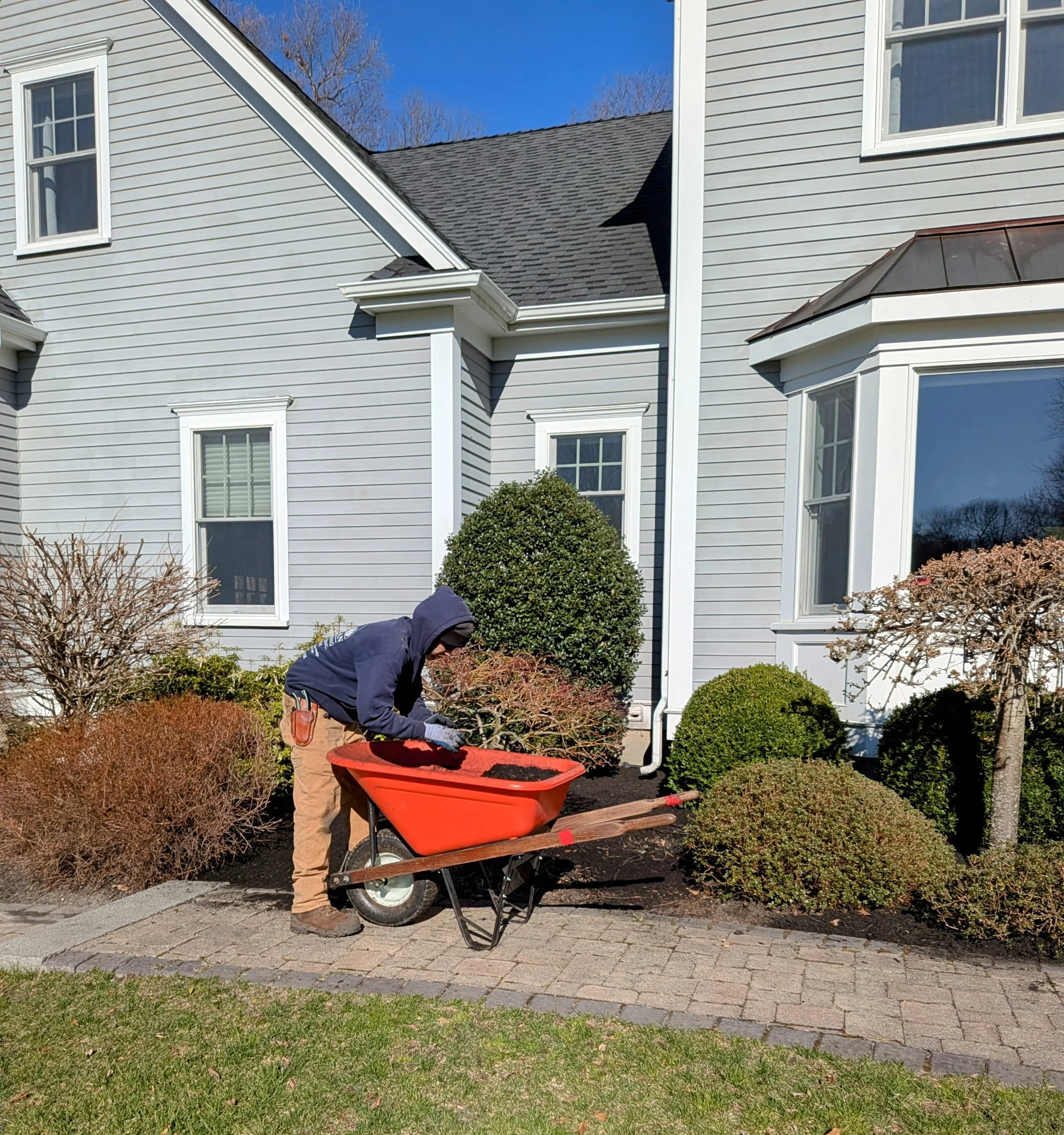
Applying a fresh layer of bark mulch is one of the final—and most visible—steps of a spring clean-up. Mulch plays an important role beyond aesthetics:
Suppresses weed growth
Improves water infiltration and moisture retention
Adds nutrients as it breaks down
Provides visual contrast, making plantings stand out
When applied correctly, mulch protects plants rather than smothering them, enhancing both beauty and function.
A Time for Observation
Spring clean-ups are also an opportunity for close observation. This is when we identify:
Plants that didn’t make it through the winter
Early signs of plant pests or pathogens
Areas that may need adjustments, replacements, or enhancements
Catching issues early helps keep your landscape pristine and prevents small problems from becoming larger ones later in the season.
Protecting Your Investment
Your landscape is a living investment that changes and grows over time. Ongoing landscape maintenance ensures that investment continues to deliver beauty and enjoyment. A clean, well-maintained garden not only looks neat and polished but also performs better—developing fully and reaching its peak throughout the growing season.
Maintenance Options That Fit Your Needs
At Ahronian Landscaping & Design, we offer flexible options to support your landscape all year long:
Seasonal services such as spring clean-ups, pruning, fall clean-ups, mowing, lawn care, and fine gardening
Annual maintenance plans that bundle services into one comprehensive package for consistent care and peace of mind
Whether you prefer targeted seasonal help or a full-service maintenance approach, our team works with you to create a plan that fits your property and your goals.
Start the Season Strong
March is the moment to reset, refresh, and prepare for the season ahead. A professional spring clean-up ensures your landscape starts strong—healthy, tidy, and ready to grow.
At Ahronian Landscaping & Design, we bring decades of experience and attention to detail to every landscape we maintain. With the right care at the right time, your garden will reward you all season long.
Warming Up Outdoor Living: Fire Features & Kitchens That Transform Your Landscape
Elevate your outdoor living space with custom fire pits, outdoor kitchens, and fireplaces. Discover how expert landscape design creates warm, inviting outdoor retreats you can enjoy year-round.
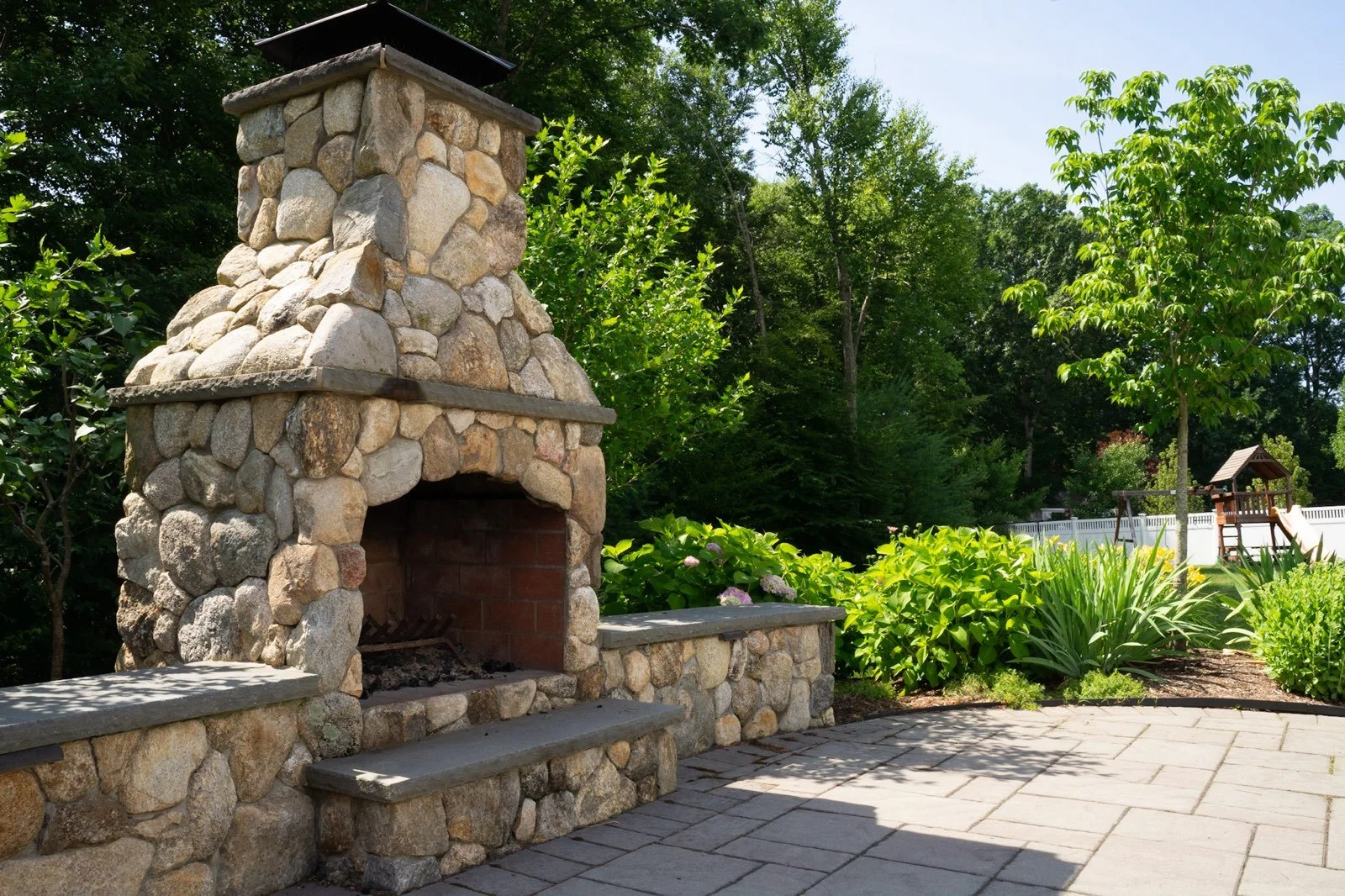
February may be the heart of winter, but it’s also the season when homeowners begin imagining what’s possible outside their doors. Outdoor fire pits, fireplaces, and kitchens are some of the most impactful ways to extend your living space beyond the walls of your home. At Ahronian Landscaping & Design, these features are thoughtfully designed to blend comfort, style, and function—creating outdoor environments that invite connection year-round.
Extending Your Living Space Outdoors
Outdoor living is no longer just a summer concept. With the right design elements, your yard can become a four-season destination. Fire features and outdoor kitchens turn patios and decks into natural gathering places, offering warmth, ambiance, and functionality well beyond daylight hours.
Whether it’s a quiet evening by the fire or a lively weekend gathering, these spaces feel like true extensions of your home—designed with the same care and intention as your interior rooms.

Fire Features: Warmth, Style, and Atmosphere
Fire features bring instant character and comfort to a landscape. They anchor outdoor spaces and create natural focal points that draw people together.
Fire Pits – Available in a range of sizes and styles, fire pits are ideal for casual seating areas and relaxed entertaining.
Outdoor Fireplaces – From classic masonry fireplaces to custom-built statement pieces, fireplaces add structure, height, and architectural presence.
Custom or Insert Options – Fire features can be built entirely from scratch or incorporate inserts, depending on the desired look and function.
Placed poolside, within a patio lounge, or as part of a larger outdoor oasis, fire features create warmth and ambiance while extending the hours you can comfortably enjoy your space.
Outdoor Kitchens: Built for Entertaining
Outdoor kitchens take entertaining to the next level. They allow hosts to stay connected with guests while preparing meals and make outdoor dining effortless.
Designs can be tailored to fit your lifestyle—whether that’s a simple grill station or a fully equipped kitchen with prep space, storage, and seating. When paired with fire features, outdoor kitchens become the heart of an outdoor living area.
Materials That Set the Tone
Material selection plays a major role in both the look and longevity of outdoor features. At Ahronian Landscaping & Design, we help clients choose materials that complement their home and withstand New England’s climate.
Granite – Durable, refined, and ideal for high-traffic areas.
Pavers – Versatile and available in a wide range of colors and textures.
Fieldstone – Natural and rustic, perfect for timeless, organic designs.
Veneer Stone – Offers flexibility in style while delivering a polished, cohesive look.
These materials can be mixed and matched to create outdoor spaces that feel classic, modern, or anywhere in between.
Creating a Complete Outdoor Oasis
Fire pits and kitchens often serve as the foundation for a fully integrated outdoor experience. Thoughtful landscape design brings all the elements together.
Popular additions include:
Seating walls that provide built-in gathering space alongside patio furniture
Decks and patios that define zones for dining, lounging, and play
Artificial turf for kid-friendly play areas
Outdoor TVs and putting greens for recreation and entertainment
Landscape lighting to highlight specimen plants, improve safety, and extend evening use
When designed as a cohesive whole, these features transform a yard into a destination.
Designed With Safety and Longevity in Mind
Fire features require careful planning to ensure safe placement, proper clearances, and thoughtful integration with surrounding materials and plantings. Professional installation ensures your outdoor living space is not only beautiful but safe and built to last.
Plan Now, Enjoy Longer
February is an ideal time to start planning outdoor living projects. Early design allows time to refine layouts, select materials, and schedule construction so your space is ready to enjoy when warmer weather arrives.
At Ahronian Landscaping & Design, we specialize in crafting custom outdoor living spaces that combine fire features, kitchens, and thoughtful landscape design. From cozy fire pits to complete outdoor retreats, our team creates environments designed for connection, comfort, and year-round enjoyment.
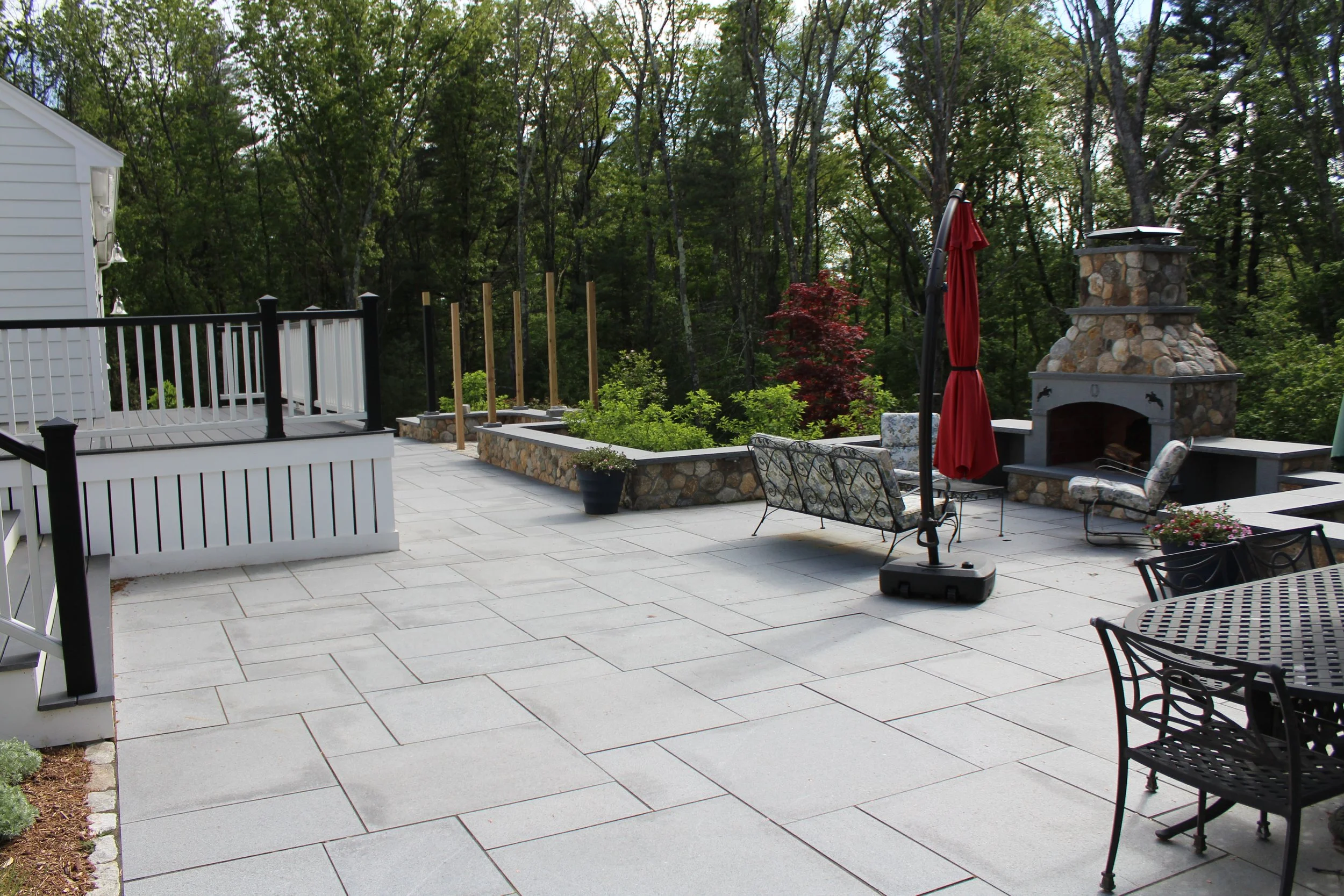
Patios are the Foundation of Outdoor Living
Start planning your custom patio this winter. Learn how expert patio design, proper drainage, and premium materials create durable, beautiful outdoor living spaces with professional landscape design.
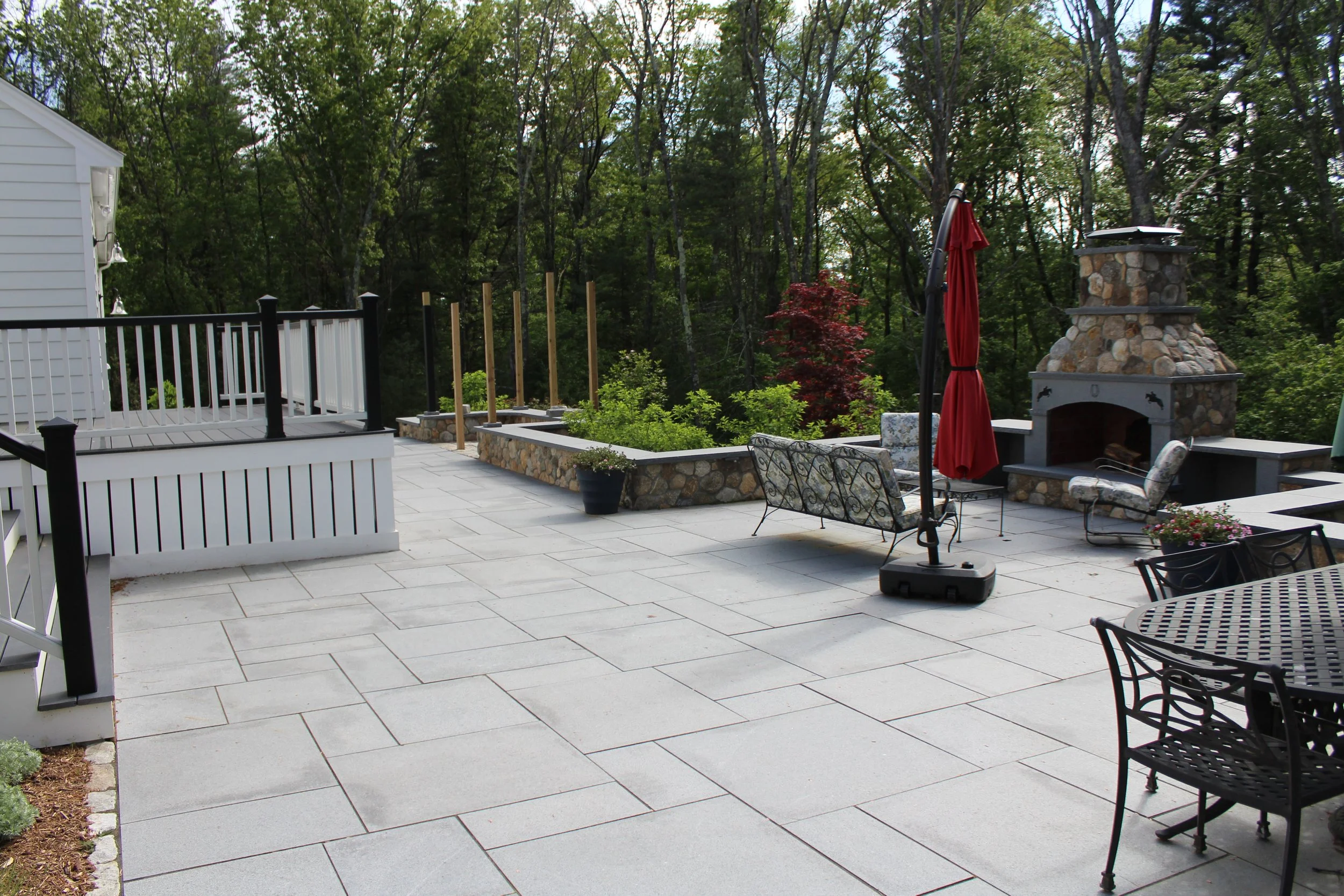
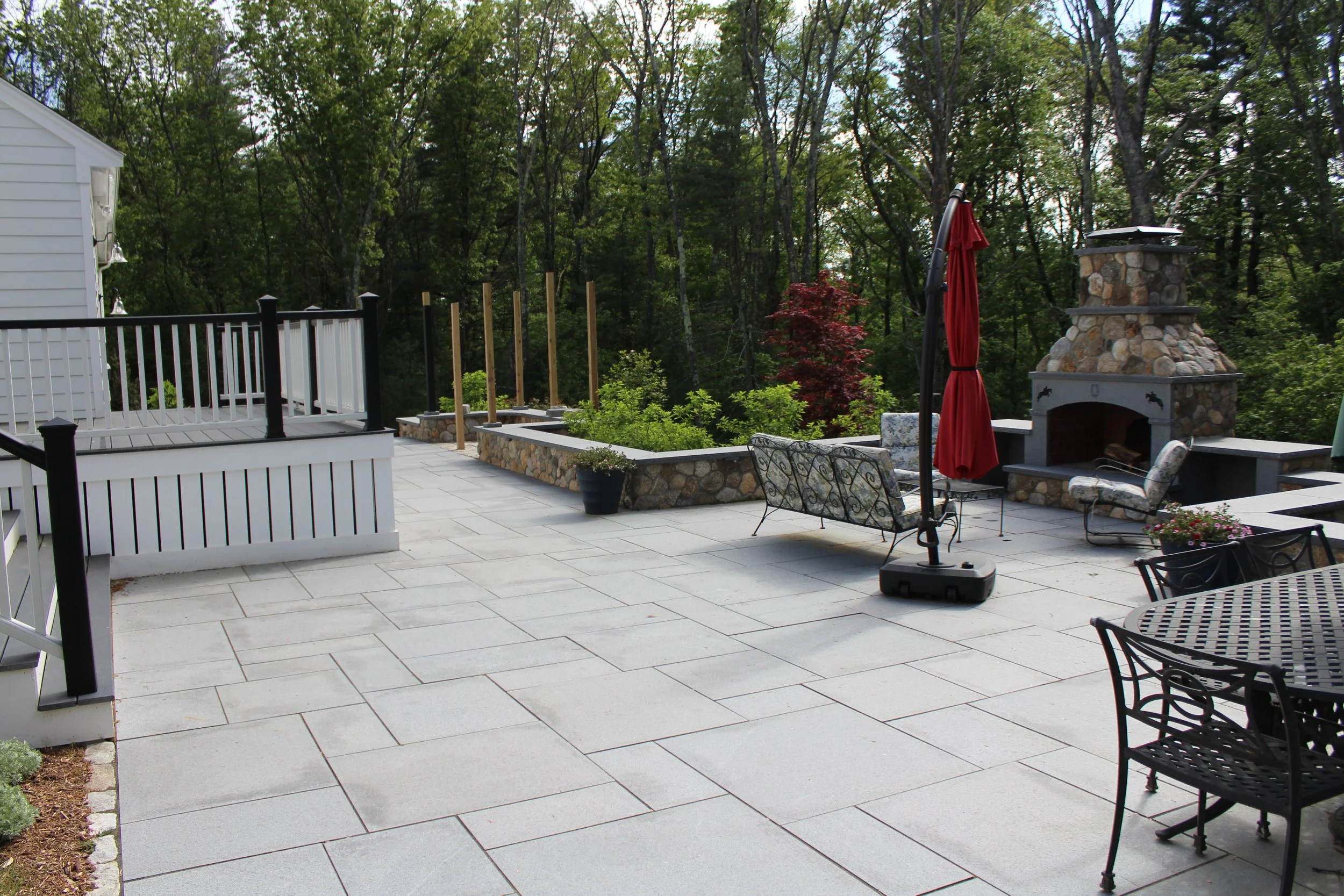
In the heart of winter, it may feel early to think about patios—but January is actually the perfect time to start planning. A well-designed patio is the foundation of outdoor living, setting the stage for everything from quiet morning coffee to lively summer gatherings. At Ahronian Landscaping & Design, patio projects are carefully crafted to balance beauty, function, and long-term durability, ensuring they perform just as well as they look.
Why Patio Design Matters for Thoughtful Outdoor Living
A patio is more than just a hard surface—it’s an extension of your home. Successful patio design considers how the space will be used, how it connects to the surrounding landscape, and how it holds up over time. From intimate seating areas to expansive poolside patios, every detail matters.
Building a Patio That Lasts
The longevity of a patio starts below the surface. Proper preparation is essential to achieving a safe, level, and long-lasting outdoor space.
Subgrade Preparation – A stable, well-compacted subgrade is the backbone of a successful patio. Without it, even the most beautiful materials can shift, settle, or crack over time.
Drainage Planning – Water management is critical. Thoughtful drainage design prevents pooling, protects nearby foundations, and ensures your patio remains usable after heavy rain.
These behind-the-scenes elements are where professional craftsmanship truly shines—and where long-term performance is determined.
Material Choices & Design Details
One of the most exciting parts of patio planning is selecting materials and patterns that complement your home and landscape.
Popular Patio Materials
Pavers – Versatile, durable, and available in a wide range of colors and textures.
Bluestone – A timeless natural stone that works beautifully in both formal and casual settings.
Granite – Known for its strength and clean aesthetic, ideal for high-traffic areas.
Each material offers unique benefits, and the right choice depends on your style, usage, and overall landscape design.
Patio Patterns & Borders
Design details elevate a patio from simple to standout.
Brick patterns such as herringbone or running bond add classic structure.
Bluestone or granite laid in French or random patterns create a more organic feel.
Borders using contrasting colors, sizes, or patterns can define the space and add visual interest.
Permeable vs. Non-Permeable
Permeable patio systems allow water to filter through the surface, supporting sustainable drainage solutions and reducing runoff. Non-permeable options, when paired with proper drainage design, still perform beautifully in many settings.
Sizing, Shape & Placement
A successful patio feels natural in its surroundings. That comes down to scale, shape, and location.
Sizing – A patio should be large enough to comfortably support its intended use—whether that’s dining, lounging, or entertaining—without overwhelming the yard.
Shape – Clean lines feel modern and structured, while curved edges create a softer, more organic look.
Location – Patios can anchor a backyard, frame a pool area, sit beneath a pergola, or connect directly to outdoor seating and fire features.
When paired with elements like a fire pit, fireplace, or outdoor seating walls, patios become true gathering spaces that extend the outdoor season well beyond summer.
Planning Now for the Season Ahead
January is the ideal time to begin thinking about patio projects. Early planning allows time to refine designs, select materials, and schedule construction so your outdoor living space is ready when warm weather arrives. A thoughtfully designed patio doesn’t just enhance your yard—it transforms how you experience your home.
At Ahronian Landscaping & Design, we specialize in creating custom patios that blend craftsmanship, functionality, and beauty. From material selection to precise installation, our team ensures every patio becomes a lasting centerpiece of your landscape.

The Beauty of Blue Spruce: A Perfect Evergreen for Year-Round Interest
Add year-round beauty to your landscape with the Blue Spruce. Learn why this hardy evergreen is ideal for fall tree planting in Massachusetts and how expert landscape design can help it thrive for generations.

As the colors of fall begin to fade and the landscape shifts toward winter, evergreen trees take the spotlight—adding structure, color, and life to our surroundings. One standout species that offers exceptional beauty and resilience is the Blue Spruce. Known for its striking silvery-blue needles and classic pyramidal shape, this hardy evergreen provides year-round interest and has long been a favorite in New England landscapes.
At Ahronian Landscaping & Design, we love planting Blue Spruce trees for their strength, elegance, and versatility—and this year, we even helped share them with our community by handing out seedlings at the Holliston Home Expo and Celebrate Holliston. Watching these small trees grow alongside the families who planted them perfectly captures what we value most about seasonal landscaping: growth, connection, and longevity.
Why Choose a Blue Spruce?
The Blue Spruce (Picea pungens) offers both beauty and durability, making it an excellent choice for homeowners looking for low-maintenance evergreens that thrive in New England’s climate.
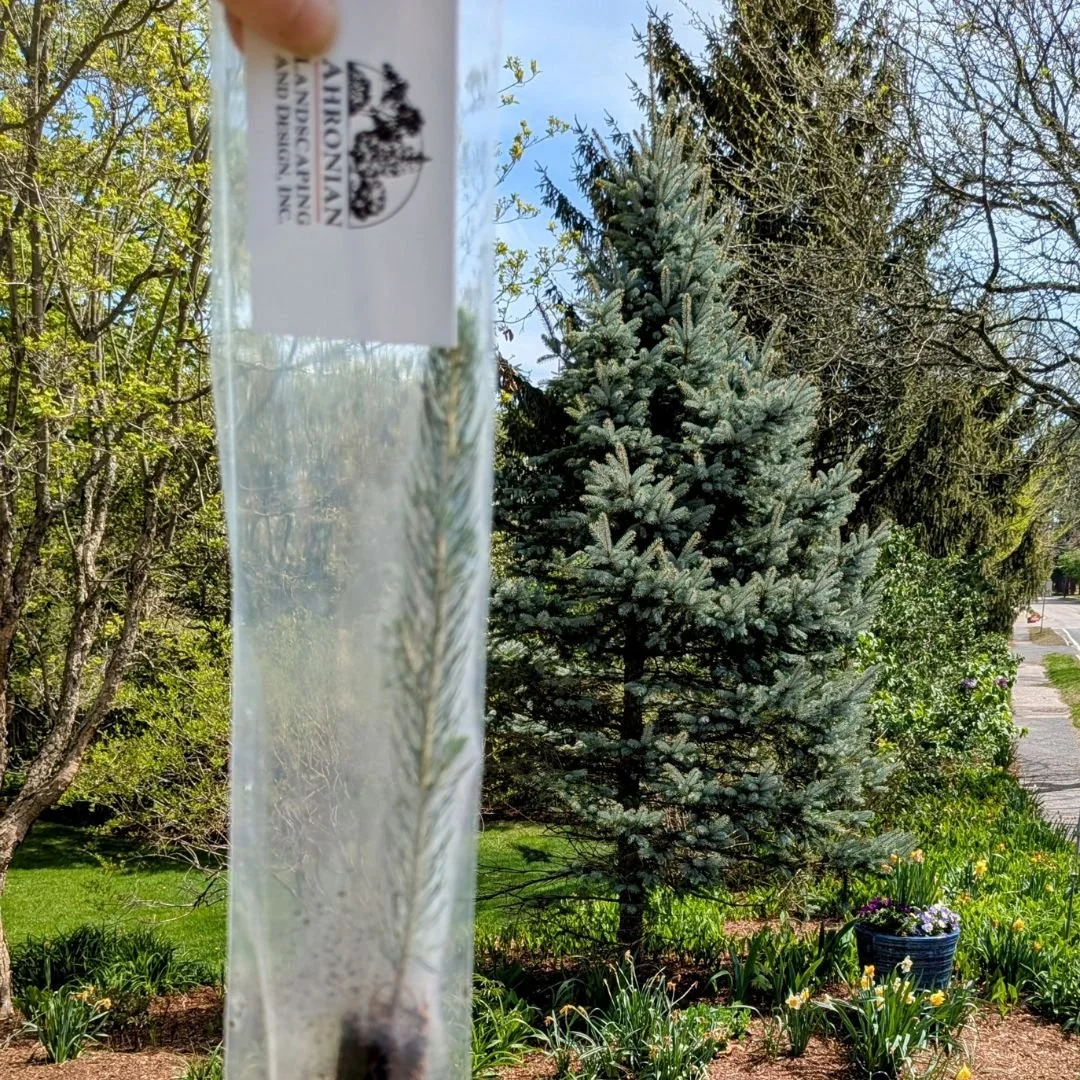
Hardy & Adaptable – Blue Spruce trees are hardy in our growing zone and handle cold Massachusetts winters with ease. Once established, they can even tolerate drought conditions.
Sun-Loving & Resilient – These evergreens prefer full sun and tolerate air pollution and road salt, making them well-suited for both suburban and urban settings—even near driveways or streets.
Elegant Form & Color – Their natural pyramidal shape and vibrant blue-green needles add depth and color to the landscape all year long. During the holidays, they look especially magical, dusted with snow or decorated with twinkling lights.
Low Maintenance & Deer Resistant – Blue Spruce trees are naturally low-maintenance, needing little pruning and offering great deer tolerance. They’re perfect for homeowners seeking lasting beauty with minimal upkeep.
Variety of Sizes – Mature Blue Spruce trees can reach 40–60 feet tall and 10–20 feet wide, but there are also dwarf and compact varieties that grow as small as three feet—available in globe or conical forms, ideal for smaller gardens.
Planting Tips for Success
For long-term success, proper tree planting and placement are essential.
Give It Space – Plant at least 20–30 feet from your home or other large trees to allow full growth without crowding. Blue Spruce trees like room to spread and don’t thrive in tight spaces.
Soil & Drainage – Choose well-drained soil to prevent root rot. While Blue Spruce can tolerate a range of conditions, they prefer not to sit in overly wet areas.
Sun Exposure – Make sure they receive plenty of sunlight—this is key to maintaining their strong shape and rich blue color.
Ongoing Care – Like all evergreens, Blue Spruce trees should be watered consistently until the ground freezes to help their roots stay healthy through the winter.
Growing With the Community
Last fall, we partnered with the Holliston Lions Club to plant a Blue Spruce in Blair Square in the heart of Holliston. The tree symbolizes growth, community, and the future—a living reminder of how seasonal landscaping connects people and places. For the families who brought home small Blue Spruce seedlings from this year’s events, each tree will tell a story as it grows: a story of time, care, and the beauty of nature right at home.
A Perfect Tree for the Season—and Beyond
As we enter the colder months, evergreens remind us that the landscape is never truly asleep. The Blue Spruce offers strength, color, and charm when the rest of the garden rests. Whether you’re looking to enhance your property with a statement tree, add structure to your winter landscape, or carry on the tradition of planting evergreens for the next generation, this beautiful evergreen is the perfect choice.
At Ahronian Landscaping & Design, we bring decades of experience in landscape design and professional tree planting throughout Massachusetts. If you’re inspired to add a Blue Spruce—or other evergreens—to your property this season, contact us to help you choose the right tree for the right spot.

Landscape Maintenance: The Art and Purpose of Pruning Services
Keep your landscape beautiful and healthy with expert pruning services from Ahronian Landscaping. Our shrub and tree pruning is part of a comprehensive landscape maintenance plan tailored to your property.
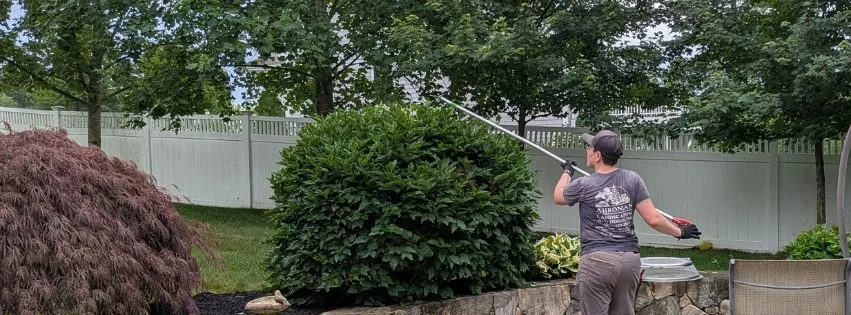
Pruning services are more than just trimming plants to make them look neat—it’s a horticultural practice rooted in science and strategy. At Ahronian Landscaping, serving Holliston, Hopkinton, Newton, Wellesley, Framingham, and surrounding towns, we view pruning as essential to maintaining the long-term health, beauty, and balance of your yard's landscape. Here’s a closer look at why, when, and how we prune for both aesthetics and also vitality.
🌿 Why Prune? The Purpose Behind Our Pruning Services
Pruning is a fundamental part of garden care with much more far-reaching benefits:
Control Plant Size: Pruning helps manage how large your plants grow, keeping them proportionate to your landscape design and preventing overgrowth that can feel chaotic or out of place.
Promote Plant Health: By removing diseased, damaged, or dead limbs, pruning protects plants from infection caused by insects, fungi, or bacteria.
Enhance Visual Appeal: A well-pruned garden appears intentional, tidy, and beautifully maintained—bringing out the best in each plant’s natural form.
Protect Your Investment: Landscaping is a significant investment. Regular pruning ensures your plantings thrive and your property continues to look its best year after year.
Consider the Big Picture:
Start with a vision of what you want your landscape to look like.
Think about the plant’s role in the landscape and how it complements nearby plants.
A balanced pruning job respects both form and function.
Timing is Everything:
Proper timing enhances plant recovery and future blooming.
A general rule: prune after the plant’s bloom time and before its next bud set.
Our seasonal landscape maintenance plans include strategic pruning throughout the year, and we also offer winter pruning services for species that benefit from dormant-season care.

✂️ Strategy on Your Landscape Maintenance: Prune with Purpose and Vision
Pruning is both an art and a science. Our pruning service approach ensures plants remain healthy while contributing to the overall beauty of your yard.
The Pruning Order:
Remove Dead Wood: Always begin by pruning out anything dead or dying to prevent decay and disease from spreading.
Address Health Concerns: Cut away crossing, rubbing, or inward-growing branches to prevent damage and improve airflow.
Shape with Intention: Each plant species—and each property—has a unique look. We shape plants based on their natural growth habits, the design style of your landscape, and your personal preferences.
🌱 Types of Pruning Techniques
Different situations call for different types of pruning:
Rejuvenation Pruning: A bold technique used on certain hardy shrubs like rhododendrons. It dramatically reduces size and encourages vigorous new growth.
Rotational Pruning: Common for shrubs like lilacs, this method removes older stems to encourage newer, more youthful shoots.
Thinning: Improves air circulation and light penetration by removing selected branches throughout the plant.
Heading Back Cuts: Shortens stems by cutting back to a leaf node or bud, helping control shape and growth direction.
🛠️ Tools of the Trade: Equipment Matters
Using the right tool for the right cut ensures clean, healthy pruning and minimizes the risk of plant stress or infection.
Here are some tools we use in different scenarios:
Hand Pruners: For smaller branches and detailed work.
Loppers: For thicker stems that need more leverage.
Hand Shears & Power Shears: Ideal for shaping hedges and softer growth.
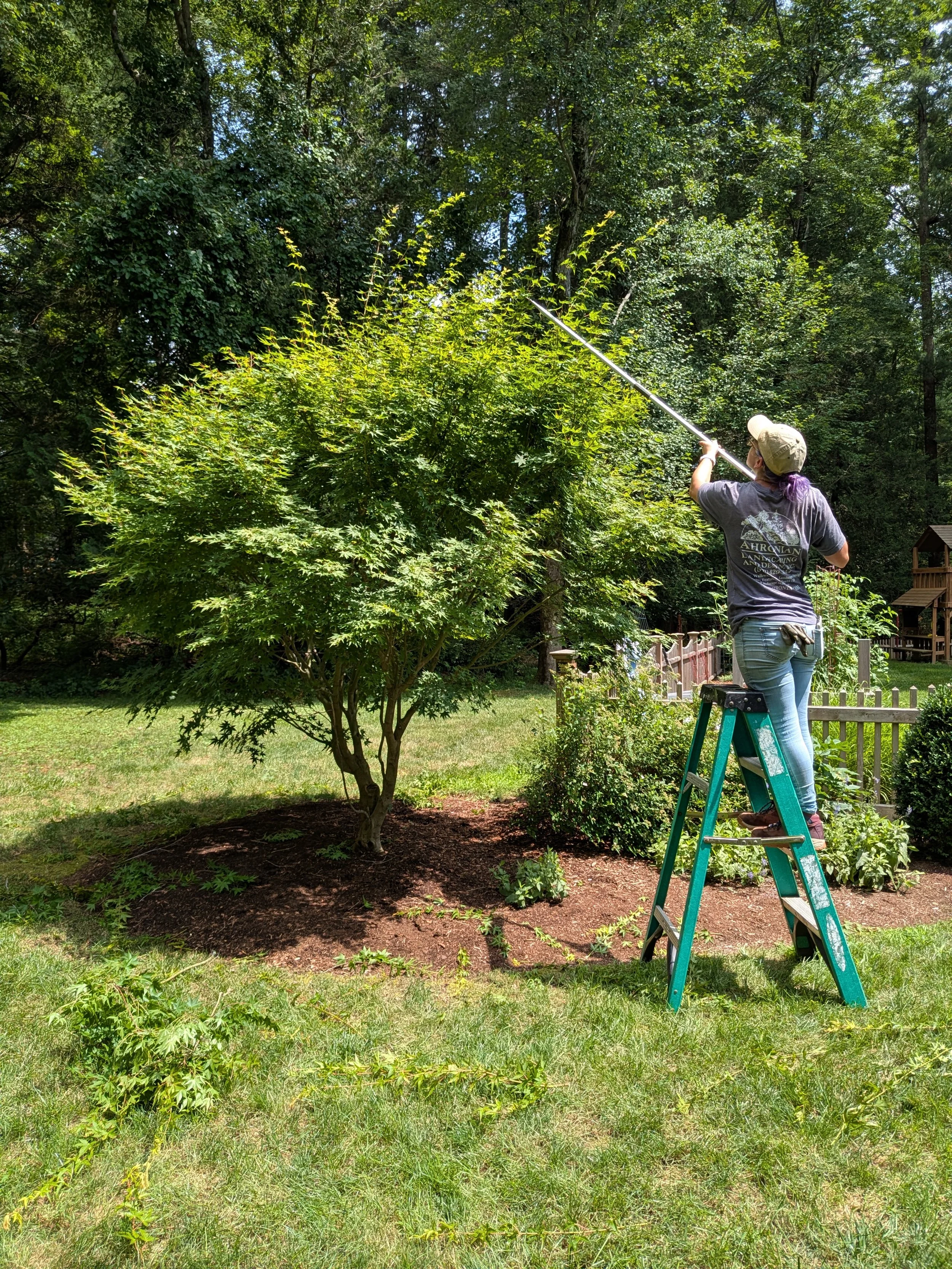
Pole Pruners: Extend reach for taller shrubs or small trees.
Orchard Ladders: Provide safe access to higher limbs.
Chain Saws & Sawzalls: Used carefully for heavy-duty pruning and rejuvenation cuts.
Each piece of equipment serves a purpose—and our trained team knows exactly when and how to use them.
🌸 Prune for a Healthier, Happier Landscape
At Ahronian Landscaping, we don’t just prune to make things look tidy—we prune to promote long-term plant health, enhance the natural beauty of your yard, and ensure your landscape remains a thriving reflection of your vision. We see pruning as an essential part of your year round landscape maintenance, so hopefully with these tips and tricks you will be on your way to adding it into your landscaping routine!
But if you are looking for a little help, whether you’re tackling overgrown shrubs, shaping flowering perennials, or refreshing tired trees, we are here with expert pruning plans tailored to your property’s needs.
👉 Contact us today to learn more about our pruning services or to set up a seasonal landscape maintenance plan. And check out below if we landscape in your area!
Holliston, Hopkinton, Sherborn, Dover, Wellesley, Sudbury, Wayland, Weston, Natick, Medway, Franklin, Wrentham, Medfield, Millis, Upton, Hopedale, Milford, Framingham, Ashland, Newton, Southborough, Westborough, Walpole, Westwood, Needham.

Mountain Laurel: A Show-Stopper for Yard Landscapes and Gardens
Add stunning color with native Mountain Laurel! Explore pink Mountain Laurel varieties for your yard landscape design with Ahronian Landscape.

As you plan your spring and early summer landscape updates, now is the perfect time to spotlight one of New England’s most breathtaking native plants —The Mountain Laurel plant (Kalmia latifolia). Blooming in full force right now, Mountain Laurel brings unmatched beauty to any garden and yard landscape with its intricate flowers, evergreen foliage, and versatile sizing options.
Whether you’re working with open garden beds or rock gardens, there’s a variety that will work beautifully in your space. We’ve captured this season’s blooming beauties right here in our own yard — both the classic ‘Fuscata’ and its charming dwarf counterpart, ‘Minuet’.

Why Mountain Laurel for Your Yard Landscape?
With its showy, star-like flowers, the Mountain Laurel shrub is a stunning focal point through all four seasons. Native to the eastern United States, this evergreen is cold-hardy, deer-resistant, and perfect for adding color, texture, and structure to your yard landscape.
It thrives in partial shade and acidic, well-drained soil — making it ideal for woodland gardens, shady borders, or anywhere you want to introduce bold, native charm. Plus, its flowers attract pollinators like bees and butterflies, supporting local ecosystems while beautifying your space.
Key Characteristics for the Mountain Laurel Plant
Foliage: Dense, glossy green leaves that stay vibrant year-round
Flowers: Clusters of intricately formed blooms in white, pink, or red hues, usually appearing in late spring
Pest & Disease Resistance: Generally low-maintenance with strong resistance to common pests
Wildlife Benefit: Attracts pollinators and provides shelter for birds and beneficial insects

Meet the Varieties
🌸 ‘Fuscata’ – A tall, classic Mountain Laurel that can grow up to 10 feet high. It boasts dramatic clusters of light pink flowers with deep red accents — perfect as a backdrop or statement shrub in larger landscape beds.
🌸 ‘Minuet’ – A compact, dwarf variety that matures at around 3 feet tall. Though small in size, it produces similar striking blooms to its larger cousin. Ideal for rock gardens, small borders, or under windows where height matters.
Both varieties are in peak bloom now at our yard, offering a firsthand look at their visual impact and garden potential.
Ideal Yard Landscape Uses
✔ Foundation Planting – Add evergreen appeal near your home while enjoying seasonal blooms
✔ Woodland & Shade Gardens – Naturally thrives in dappled light conditions
✔ Rock Gardens – Especially the dwarf ‘Minuet’, which offers color and texture without overwhelming small spaces
✔ Pollinator Gardens – Flowers draw in bees and other beneficial insects during the blooming season
✔ Evergreen Structure – Provides year-round form and greenery in beds that may otherwise go dormant in winter
Mountain Laurel Care & Maintenance
Mountain Laurel prefers acidic, well-drained soils and does best in partial shade. Once established, it’s relatively low-maintenance — requiring only occasional pruning to maintain its shape and remove spent blooms. Be mindful that while Mountain Laurel is beautiful, it is also toxic if ingested, so consider pet placement when planning.
Invest in Seasonal and Structural Beauty
By incorporating Mountain Laurel into your garden design, you’re adding more than seasonal color — you’re investing in a reliable presence that transforms with the seasons. Whether you’re drawn to the full-size elegance of ‘Fuscata’ or the petite charm of ‘Minuet’, this native shrub brings timeless character to your landscape.
📍 Contact us to start planning your own Mountain Laurel installation.
At Ahronian Landscaping, we’ll help you design a space that looks stunning now and lasts beautifully year-round.

Backyard Perimeter Landscaping: Layered Landscape Design for a Seamless, Natural Look in Massachusetts
Enhance your backyard with perimeter landscaping that creates a seamless transition between your lawn and the woods. At Ahronian Landscaping, we specialize in backyard landscape design, using layered landscape techniques with native plants and shrubs for a natural, low-maintenance look. Serving Massachusetts with professional landscape installation, we help homeowners achieve a beautiful, functional outdoor space.

When a new lot is cleared, the result can sometimes feel stark—flat land that stops abruptly at towering shade trees. Without the right landscaping, this contrast creates a harsh transition rather than a seamless flow between your yard and the natural surroundings. That’s where perimeter landscaping comes in.
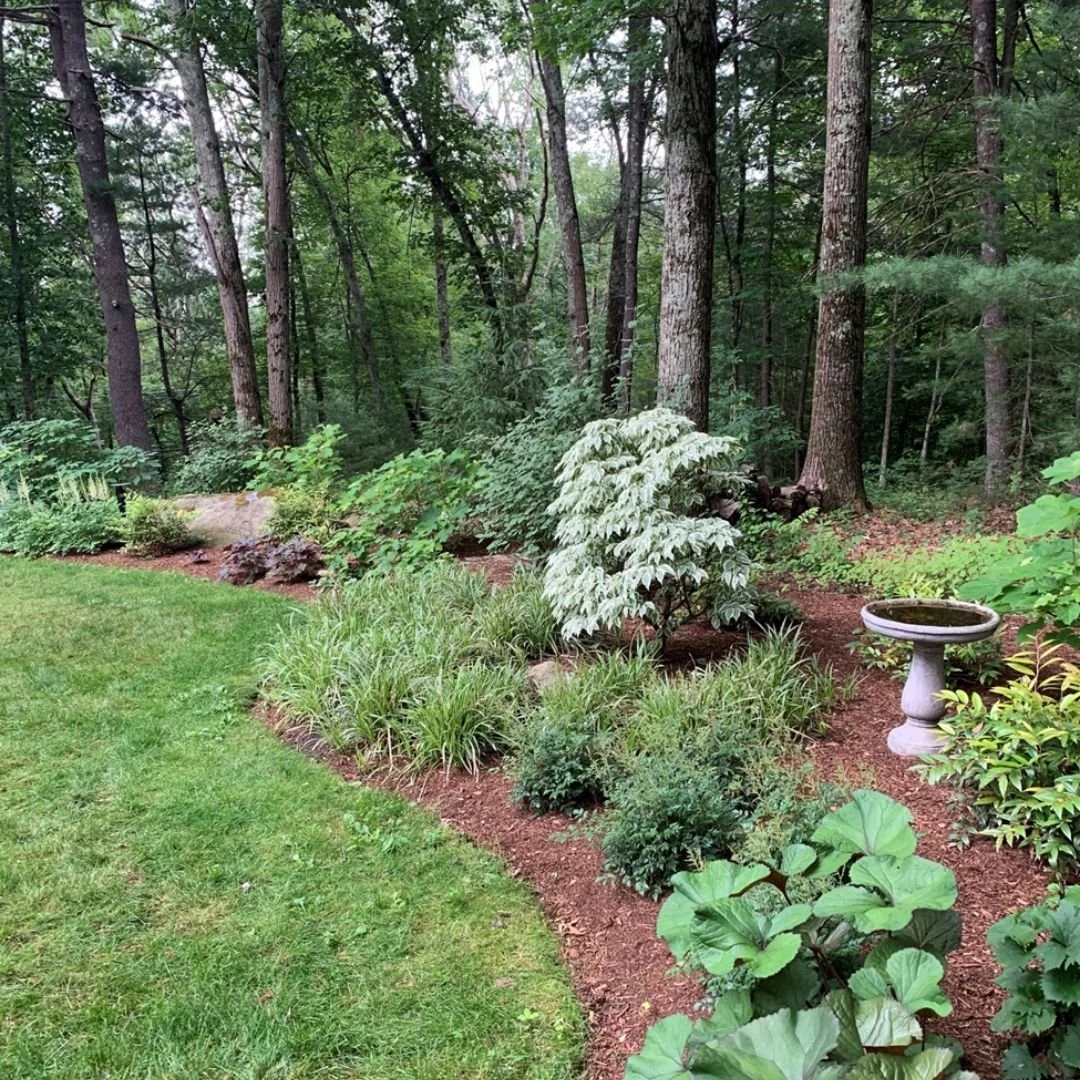
At Ahronian Landscaping, we specialize in layered landscape designs that add depth, texture, and natural beauty to your backyard. With the right combination of trees, shrubs, perennials, and natural elements, we can soften the edges of your property, blending your landscape into the existing woodland, and create a picturesque view from your patio or back window.
Why Perimeter Landscaping Matters
By layering plants of varying heights—including perennials, shrubs, and trees—you can create depth and texture that mirrors the beauty of a natural woodland. Thoughtful plant selections also help attract birds, butterflies, and beneficial insects, supporting local biodiversity while keeping wildlife in low-traffic areas. Adding bird feeders, baths, or pollinator-friendly plants further enhances your yard’s ecosystem, making it both visually appealing and environmentally beneficial.
Perimeter landscaping is also an excellent opportunity to incorporate native species, which not only thrive in the local climate but also support biodiversity and sustainability. Planting native shrubs and trees that produce berries—such as serviceberry, winterberry, and elderberry—provides essential food sources for birds and wildlife. Native grasses, perennials, and ground covers create a natural habitat that attracts beneficial pollinators while requiring less water and maintenance. By choosing plants that naturally belong in your area, you contribute to a more resilient ecosystem while enjoying a landscape that remains lush, functional, and visually stunning year-round.
Enhance your backyard view with a landscape designed to capture your eye with color, texture, and variety. Whether you’re looking out your window or unwinding on the patio, strategic plantings, accent boulders, and garden stones create a visually engaging and dynamic space. For lasting beauty with minimal upkeep, opt for deer-resistant and shade-tolerant species that naturally thrive in your area, ensuring a lush and vibrant landscape throughout the year.

Designing a Natural Backyard Border
1. Foundation Layer – The Tallest Elements
The back row of your perimeter should include a mix of evergreens, ornamental trees, and tall shrubs to establish structure and year-round interest. Great options include:
White spruce and American holly for evergreen coverage
Dogwoods or redbuds for seasonal flowers
Viburnum or winterberry for texture and wildlife appeal
2. Mid-Level Layer – Shrubs & Perennials
This layer softens the look of taller trees while adding variety in color and texture. Some excellent choices include:
Hydrangeas for lush, eye-catching blooms
Ornamental grasses like switchgrass or feather reed grass for movement and depth
Clethra (Summersweet) or Astilbe, shade-friendly and pollinator-attracting options
3. Ground-Level Layer – Perennials & Natural Accents
Low-growing plants help complete the transition from structured landscaping to natural forest. Consider:
Ferns for a lush, woodland-inspired aesthetic
Hostas for bold foliage and shade tolerance
Black-eyed Susans or Coneflowers to attract butterflies
Accent boulders or natural garden stones for added texture
Bringing It All Together
Perimeter landscaping is more than just an aesthetic upgrade—it’s a way to reconnect your yard with the natural world while improving privacy, wildlife habitat, and your view.
At Ahronian Landscaping, we specialize in designing custom backyard landscapes that feel like a natural extension of the environment. Whether you’re looking to soften the edges of your yard, enhance biodiversity, or simply create a more beautiful backdrop, our expert team is here to help.
Serving Massachusetts, MetroWest & Beyond | Professional Landscape Design & Installation
Ready to create a stunning, layered perimeter for your backyard? Contact us today for a consultation!

Leucothoe: A Year-Round Beauty for Your Landscape
Enhance your landscape year-round with Leucothoe, a hardy broadleaf evergreen shrub that provides vibrant foliage, seasonal color, and low-maintenance beauty. Learn why it’s perfect for your garden.

Leucothoe under the rhododendron was taken in Beth Mezitt's yard
As you plan your spring planting, consider Leucothoe—a versatile broadleaf evergreen shrub that brings year-round color, texture, and structure to your landscape. While many plants fade into the background during the colder months, Leucothoe remains vibrant, retaining its lush foliage and graceful form. Adding this hardy shrub ensures winter interest and variety, making a lasting impact in every season.
Why Leucothoe?
With arching branches, glossy leaves, and delicate, fragrant flowers, Leucothoe is an exceptional addition to any garden. Its evergreen nature ensures that your landscape remains lively even when other plants have gone dormant. Plus, with varieties displaying shades of green, red, white, and gold, the changing hues add dynamic interest to your outdoor space.

Key Characteristics:
Size: 2-6 ft tall, 4-8 ft wide
Foliage: Glossy leaves with red new growth in some varieties
Flowers: Small, bell-shaped, and fragrant, blooming in clusters during spring
Seasonal Interest: Some varieties change color in the fall
Pest & Disease Resistance: No serious issues, making it a low-maintenance choice
Wildlife-Friendly: Provides winter shelter for pollinators and attracts beneficial insects
Where to Plant Leucothoe?
Proper placement is essential to ensure Leucothoe thrives and enhances your landscape year-round. This hardy broadleaf evergreen prefers part shade, making it an excellent choice for areas with dappled sunlight or morning sun and afternoon shade. While it can tolerate full shade, providing some sunlight will help maintain its vibrant foliage. Additionally, sheltering it from strong winds will protect its delicate arching branches and prevent winter damage.
For the best results, plant Leucothoe in well-drained, acidic soil enriched with organic matter. It pairs beautifully with other shade-loving evergreens, ferns, and woodland perennials, creating a layered, textured garden design. Whether used as a foundation planting, border accent, or natural hedge, Leucothoe will add color, texture, and seasonal interest to your landscape.

Leucothoe under the rhododendron was taken in Beth Mezitt's yard
Ideal Landscape Uses for Leucothoe
✔ Accent Planting – Place near walkways, entryways, or mixed garden beds to create a focal point with vibrant, glossy foliage year-round.
✔ Hedges & Borders – A deer-resistant option for defining property lines or garden beds, offering dense coverage and seasonal color changes.
✔ Specimen Planting – Showcase its graceful, arching habit and changing foliage colors in a dedicated space within a woodland garden or shaded corner.
✔ Winter Interest Planning – A strategic choice for maintaining visual appeal when most plants go dormant, ensuring year-round beauty in your garden.
By thoughtfully integrating Leucothoe into your landscape, you’ll enjoy stunning foliage, delicate spring flowers, and reliable winter interest, making it a valuable addition to any garden design.

Care & Maintenance
Leucothoe is easy to maintain and can handle significant pruning to control its size and shape, making it a versatile choice for various landscape designs. It thrives in well-draining, acidic soil and benefits from consistent moisture, though it should not be left in overly soggy conditions. While this shrub adds beauty to your garden, it’s important to note that Leucothoe is toxic if ingested, so keep it out of reach of pets to ensure their safety.
Invest in Year-Round Beauty
Including Leucothoe in your spring landscape plan means you’re investing in a plant that will reward you with beauty not just in spring and summer, but in fall and winter too. If you’re looking for a low-maintenance, evergreen shrub that offers seasonal variety, pollinator benefits, and resilience, Leucothoe is an excellent choice.
At Ahronian Landscaping, we can help you design a landscape that remains visually stunning throughout the year. Contact us today to learn more about incorporating Leucothoe and other high-value plants into your garden.